
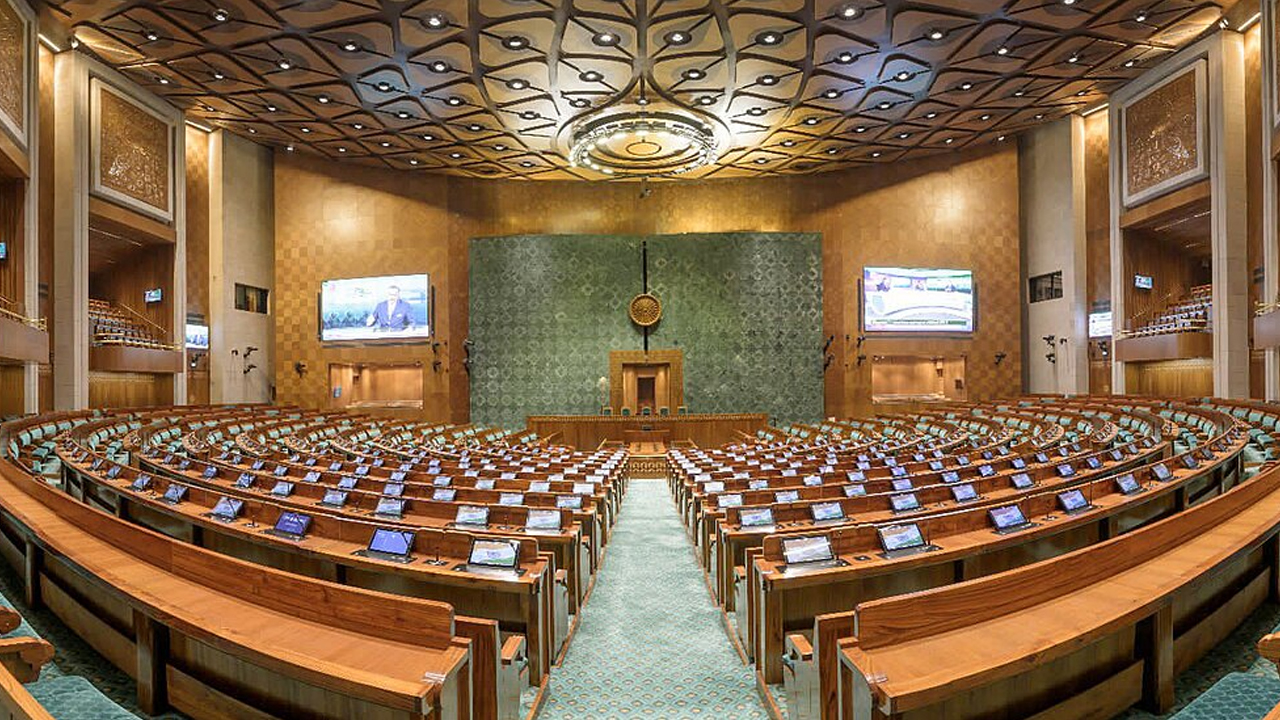
Muslim women are among the most vulnerable minorities in India. The book – Missing from the House: Muslim women in the Lok Sabha – is a much needed conversation starter on the issue of their political representation and empowerment.
Zaid Al Baset
Groundxero | Dec 2, 2025
Missing from the House: Muslim women in the Lok Sabha begins with a dispiriting revelation that ‘… only eighteen Muslim women have made it to the Lok Sabha since the first Parliamentary polls in 1951-52’. Muslim women constitute about 7.1 percent of India’s population yet not more than four have ever been elected to the lower house of the Parliament at the same time. Worse still, they have been absent from 5 out of 18 elected Lok Sabha. Rasheed Kidwai and Ambar Kumar Ghosh’s book provides a rich account of the trajectories of these 18 Muslim women parliamentarians.
The book could not have been timelier. In the past decade, the entrenchment of Hindutva politics in the Indian democratic system has accelerated phobic and antagonistic reactions against Indian Muslims. This poses a serious challenge to the health and ideals of a secular democracy. Keeping in mind the intersections of gender and religion, Muslim women are among the most vulnerable minorities in India. The book is a much needed conversation starter on the issue of their political representation and empowerment.
There exists a global cultural industry invested in recuperating Muslim women’s voices in a bid to malign the Muslim community, Islam or attack Muslim men as essentially backward and violent. This book steers clear of such trappings and offers a more nuanced lens to understand the near erasure of muslim women from Indian politics.
The authors note the ‘double jeopardy’ of being women and being from a minority community that hinders their political participation. Indian women are subjected to patriarchal ideals of domesticity. The prevalent misogynistic and masculinist political culture discourages them further. The authors contend that in the arena of competitive party politics women are assumed to be less likely to win elections or manage governance. These factors are compounded by women’s religious minority status. While the authors acknowledge that religious identity adversely impacts Muslim women’s political agency, I felt that their stance that ‘religion, religious beliefs and practices are personal’ and a ‘no go’ area restricts them from a more careful analysis of the role of religion in this ‘double whammy/jeopardy’. The historical construction of Muslims as communal, backwards, anti-national, disloyal and excessively patriarchal in post colonial India has had manifold effects in the social, political and economic situation of Muslims. The authors make up for this diffidence in their well researched and earnest accounts of the struggles and largely unsung achievements of each of these eighteen women.
Each profile tells a story of grit, determination, challenges and achievements. Yet, the authors through their narrative style convincingly bring out the versatility and uniqueness of these women. The readers will find themselves getting invested in their life stories. 13 out of 18 Muslim women parliamentarians hail from dynastic backgrounds. It would be rather easy to dismiss their political careers as contingent on their accumulated privilege and nepotism. But, many of these privileged women entered politics or rose to prominence due to a familial crisis – Abida Ahmed, Sajeda Ahmed, Noor Bano and Tabassum Hasan contested elections after the death of their husbands, Begun Akbar Jehan Abdullah abandoned purdah to be a pillar of strength for her incarcerated husband Sheik Abdullah, Mehbooba Mufti stepped into the shoes of her deceased father and served as the only woman chief minister of Jammu and Kashmir. Negotiating the demands of public life, carrying their family legacies forwards while taking care of their household required courage and resilience. Some of parliamentarians who were not dynasts such as Zohraben Akbarbhai Chavda and Kaiser Jahan were also supported by their husbands. While the authors explicitly discuss the legacies of husbands, fathers or even father in laws and its impact on the lives of these women, a careful reader will find implicit in the chapters many instances of women supporting each other for instance Indira Gandhi’s relationship with Mohsina Kidwai and Abida Ahmed.
The 18 Muslim women in the Lok Sabha have not had the same kind of success or longevity in Indian politics and yet during their tenure each one of them have raised important questions in the parliament concerning international, national and local developments, have served in important committees and worked for their constituency tirelessly. They have been invested in infrastructural development, education, social welfare, public health, women’s rights and the empowerment of oppressed and vulnerable sections of society. The authors point out that none of these women ‘had any major allegations of corruption, criminal charges or using hate speech’. Given the nature of Indian politics, this itself seems like an achievement. It is also noteworthy that most of these women are from Northern or Eastern India, majority of them being from the states of Uttar Pradesh, Assam and West Bengal. There has been no Muslim women representation from the Southern states. The authors recognise this skewness but do not provide an analysis of it. Dwelling on these issues would have added more heft to the book.
Each chapter even as it foregrounds an individual’s political career is successfully able to give readers a sense of the local politics and historical complexities of the region. The challenges and rivalries that these women face is an outcome of the specific histories that have shaped local politics. The authors deftly handle the shifts from the personal to the political, from the familial to the public in these chapters.
Writings on Muslim women often confront a double bind. An emphasis on their difference with other women risks otherization, and an emphasis on their similarities with other women elide their specificity. Both exercises are reductive. The accounts provided by the authors carefully avoid these pitfalls and do not reduce these women to religious stereotypes. Despite limited information about these women, the book is an earnest documentation of these 18 exceptional women. Written in lucid prose and succinct chapters, the book is engaging and makes an urgent plea for the need for a deeper analysis of the absence of Muslim women in Indian politics. Given the ubiquity of the trope of ‘Muslim appeasement’ in Indian politics one wonders how the world’s largest democracy will rectify this historical exclusion of Indian Muslim women from the Lok Sabha.
________________
Zaid Al Baset is an Assistant Professor of Sociology, St. Xavier’s College (Autonomous), Kolkata