
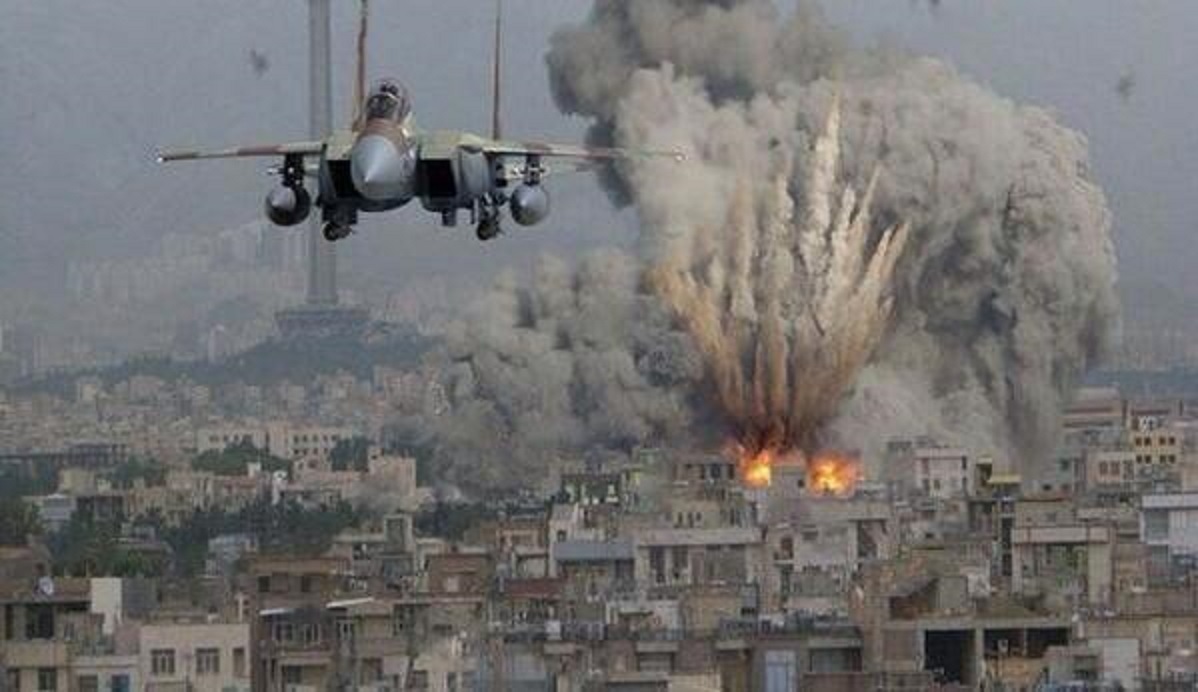
“I am Maryam Al-Nimr, a student and citizen of Gaza, writing on behalf of every Palestinian seeking safety, freedom, and humanity. I write to say: we are not just numbers in the news; we are human beings who dream, suffer, and resist.
This testimony recounts the night of July 25, 2024, when an Israeli airstrike destroyed my family home and killed several members of my family in Gaza. In a single night, multiple generations of my family were killed or severely injured when three missiles struck the house where they had taken shelter.”
What follows is Maryam’s firsthand account of the hours before the attack, the moment she learned the news, and the days that followed in overwhelmed hospitals — a record of loss, survival, and the strength required to keep going in a world that keeps trying to erase them.
Maryam Al-Nimr
Groundxero | NOV 24, 2025
July 25, 2024
In my grandfather’s abandoned house, I lived on the edge of existence.
No electricity, no internet, no sounds except my breath and my mother’s, and a faint glow from a power device barely keeping my phone and laptop alive.
I was studying, diving into architectural plans, trying to grasp my father’s dream — to finish what he started, to become what he hoped I’d be.
That night, the power went out.
We prayed the evening prayer, then slept early, for the first time in ages, in a strange calm broken only by moonlight slipping through the window, as if it knew what was coming.
1:30 a.m.
My mother’s phone rang.
My brother’s wife, her voice trembling: “Auntie, your house was bombed… they’re all martyred.”
My mother screamed: “My sons are gone, my sons are gone!”
I grabbed the phone from her, angry, convinced it was a cruel joke at an impossible hour.
“Do you see the time? This isn’t a moment for jokes!”
But she replied: “I swear, three F-16 missiles… I’m on my way there.”
I laughed, though my heart was trembling.
“Our house is ground level, made of asbestos, load-bearing walls… it’s not worth bombing!”
But she swore again and again, and fear began to devour me.
My cousin rushed upstairs, thinking someone had broken in, only to find us shattered.
My mother was crying; I was trembling.
I called my cousin downstairs: “Dina, come quickly, Mom is collapsing.”
She and her mother came up. I needed someone to hold my mother while I chased the truth.
I called my cousin Ahmed and asked him to go check — he was closest to the house.
Then I called my friend, our neighbor.
My first question: “Who was inside the house?”
I listed them: “Soso, Fatoum, Saja, Dohaa, Salah, Mohammad, Mahmoud, Dad… all of them.”
She said: “Ambulances and civil defense just arrived. Your dad is alive, they pulled him out… but Dohaa is gone. Fatoum too… they’re still searching for the rest.”
My sister from the south called, crying: “Is the news on TV true?”
I said: “It’s true.”
Then I hung up — I couldn’t take any more.
I called Ahmed again.
He said: “It’s true. Uncle is injured; Mahmoud and Salah have minor wounds. Your brother Mohammad is critically injured. His son is gone. Soso too. Saja is in critical condition. Majd is wounded.”
The phone fell from my hand.
I have asthma. My breath stopped. I collapsed. No oxygen. No sound. No tears.
My cousin and aunt rushed to me, brought my inhaler, gave me medicine. I trembled.
I looked at my mother. She said: “Not you too… it’s enough they’re gone.”
And in that moment, I decided to be strong. To stay by her side. To call my sisters’ husbands. To hold life by the throat, despite everything.
There were no men left in the family… all were wounded.
And we waited — counting minutes, watching the sky, waiting for morning to come so we could go to the hospital and face the truth.
The date was July 25, 2024.
The day my heart broke and never healed.
***
A Journey Through the Heart of Pain
That morning, unlike any other, we woke to a pain that defied description. Grief filled the air, seeping into our souls, weighing down our hearts. Yet prayer rose above it all, as if it were our final weapon against fate.
My mother, my aunt, and I set out toward the place that receives the martyrs. The road was silent, as if everything around us was watching, offering comfort through stillness. We entered the ward, and there we saw my sister’s husband standing — his eyes telling a thousand stories. My sister stood beside him, steadfast despite the sorrow.
We saw them… Soso, Fatoum, Dohaa, and my nephew Mohammad. They were wrapped in white, but their faces were smiling, as if whispering: “Don’t cry, we’re okay.” In that moment, our chests tightened, but God’s mercy descended upon our hearts like a white cloud covering the grief, filling us with certainty that they had gone to a better place — one of peace, compassion, and reunion with a generous Lord.
After bidding them farewell, we moved to the reception ward. On the beds to the left lay my brother Mohammad, with his daughter Majd in his arms, and our brother Mahmoud beside him. On the right, in the center, sat my father, gravely injured. His eyes protruded with a dark blue hue; three fractures in his jaw, bleeding, and his hand and leg shattered.
Behind me, my brother’s wife screamed in agony. She had lost both her hand and leg, her body riddled with injuries. There weren’t enough doctors, and no one seemed to truly see them. I took Majd from her father’s arms and rushed her to a doctor. She was bleeding, and I was soaked in blood. We ran from ward to ward, from doctor to doctor, as time dragged on mercilessly.
Mohammad entered surgery that afternoon, and so did Saja, my brother Mahmoud’s wife. His leg was replaced with an artificial one. That night, we slept in blood and exhaustion. I slept beside Majd, and my mother beside my brother’s wife.
At dawn, my mother looked at Saja and said, “Thank God, Saja, you finally slept. God gave you rest.” She hadn’t slept all night from the pain. But something in me felt uneasy. I approached her — no pulse. I lifted her hand; it didn’t rise with mine. I placed my ear on her chest, but my own heartbeat drowned out everything. I pressed my finger to the artery in her neck — no pulse.
I understood then that she had passed. But she was my brother’s wife… something inside me refused to accept her death. I ran outside searching for a doctor — no one. I rushed to the men’s ward and called my brother’s friend, a paramedic. He examined her, then looked at me and said, “She’s gone. She’s a martyr.”
Grief swept over me again. I couldn’t believe I had lost Saja too. But this was God’s decree.
We stayed two more days in the hospital. On the third morning, I heard my father’s screams from the men’s ward. I ran to him; he was in severe abdominal pain. He asked me to call my sister to bring him stomach medicine — Ranitidine. A friend ran to get it, but the pain persisted.
The attending doctor came, ordered urgent tests, and then transferred him to another hospital due to the severity of his condition. He had a perforation in his intestines, high blood pressure, and unstable heartbeats. My sister went with him. Shortly after, she called me:
“We need to sign a paper… there’s a 1% chance he’ll survive the surgery. If he doesn’t undergo it, he’ll die within two hours.”
That day was one of the hardest in my life. We were about to lose the pillar of our home. We prayed, we cried, we begged. After four hours, the call came:
“The surgery was successful… your father is safe.”
The news felt like a holiday, as if life had returned to us.
We stayed in the hospital for fifteen days. I stayed with Majd, who had a shrapnel wound in her thigh, a fractured pelvis, and injuries to her neck and back. I learned how to change dressings, monitor wounds, and became their nurse — though I wasn’t one.
________________
Maryam Al-Nimr is a student and citizen of Gaza.
The feature image is representational.
Also Read: Gaza: A Cry from Beneath the Rubble, an Unbreakable Will and an Undying Hope