
(This article does not seek to satisfy those in search of arguments for revolutionary transformation. While I hold that the existing system is deeply flawed, particularly in a subcontinent as complex as India, the article’s scope is deliberately limited. It confines itself to examining the question of federalism within India’s electoral framework, and nothing beyond.)
By Arkadeep Goswami
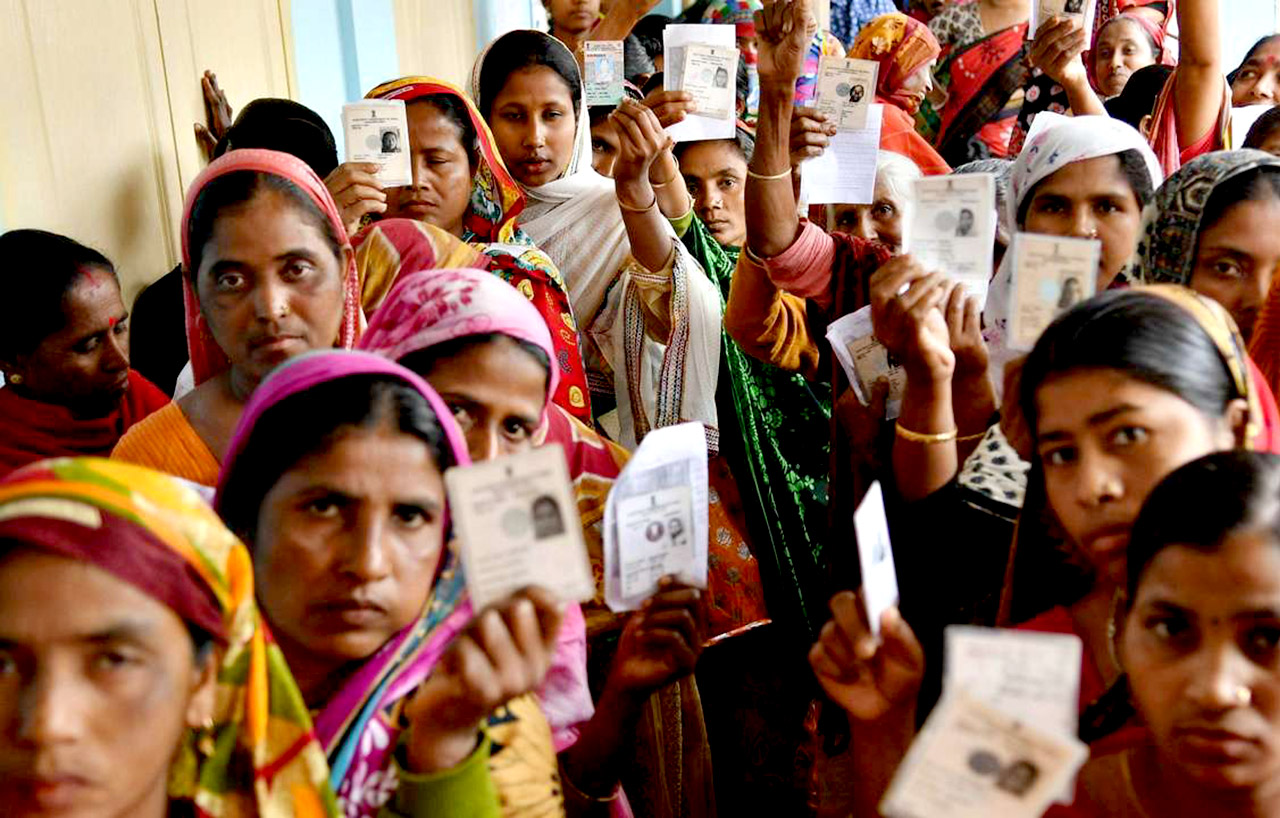
Polling for the 2026 Assembly election has concluded, and the extraordinary voter turnout of over 90 percent has been widely celebrated across the political spectrum. If participation alone were the sole criterion of democratic legitimacy, such an election would undoubtedly qualify as a resounding success. Yet, constitutional democracies are not judged merely by turnout statistics, but by the integrity of the institutional framework within which such participation occurs. The crucial question, therefore, is not how many voted, but under what conditions the act of voting was structured, regulated, and mediated.
In Article 1 of the Constitution, it is stated that “India, that is Bharat, shall be a Union of States.” This formulation is not accidental. It affirms that the constituent units of the Indian polity are not mere administrative conveniences, but political entities possessing a constitutionally recognized identity and sphere of agency. Historically rooted in linguistic reorganization, regional movements, and anti-colonial provincial assertions, this conception suggests a federal compact designed to accommodate diversity rather than subsume it.
However, this promise remains structurally qualified. The deliberate use of the term “Union” has often been invoked to justify central predominance, sometimes collapsing the distinction between coordination and control. While the Constitution empowers Parliament to alter state boundaries, this asymmetry does not negate the normative principle that states embody localized democratic will. Federalism, in this sense, is not merely a textual arrangement but a living principle that must be reflected in institutional practice.
Constitutional basis of overly-centralised election mechanism and the appointments of ECI
It is precisely here that the architecture of electoral governance becomes critical. The conduct of elections in India is centralized under the Election Commission of India (ECI), whose authority derives from Article 324 of the Indian Constitution. This provision vests sweeping powers in the Commission, extending not only to parliamentary elections but also to elections to State Legislatures. Such a concentration of authority raises several structural concerns about the nature and integrity of India’s electoral system.
First, the Election Commission is appointed predominantly by the Union executive of the day. Can such a mode of appointment reasonably be expected to guarantee neutrality and accountability, particularly in elections conducted in states governed by parties in opposition to the Union government?
Second, does this centralized framework not enable the Union government, at least indirectly, to influence or manage the democratic process within opposition-ruled states for partisan advantage?
Third, does the vesting of such expansive authority in a single central institution not strain the doctrine of separation of powers, thereby risking the credibility and perceived impartiality of the electoral machinery across the country?
These concerns are not merely contemporary reactions to the policies of the government at the Centre, which has often been accused of favouring greater centralization in administrative and political domains. Rather, they are rooted in foundational debates that predate the Constitution itself.
During the Constituent Assembly debates in June 1949, B.R Ambedkar acknowledged the gravity of the issue, remarking that the question of the Election Commission was “going to give the House a great deal of headache.” He further cautioned that the Constitution did not fully safeguard the electoral process from falling into the hands of “a fool or a knave or a person who is likely to be under the thumb of the executive.”
Similarly, another member Annie Mascarene warned that such provisions could place provincial elections under the “perpetual tutelage of the Centre,” thereby casting doubt on the integrity and autonomy of the people in the provinces. She said, “If this section is to be accepted, we are to believe that thereafter the provincial election will be under the perpetual tutelage of the Centre. That means, Sir, that the Integrity of the provincial people is questioned.”
Several other members raised questions regarding this section as well. But, despite all these questions this section was accepted by the Constituent Assembly with an almost useless ‘Safety Clause’ in Article 324(2), saying appointments to the Election Commission would be “Subject to the provisions of any law made in that behalf by Parliament.” The very text of the clause fails to provide a satisfying answer to the question. What on earth stops a parliamentary majority to pass a law that can be used to the ends of their own Partisan benefits? Whatever it is, until 2023, such a law was never made by the Parliament. Finally in 2023, the Supreme Court in Anoop Baranwal v. Union of India (2023) attempted to secure neutrality through the formation of a selection committee comprising the Prime Minister, the Leader of the Opposition and the Chief Justice of the Supreme Court until Parliament makes a law in this regard. The parliament, after the verdict, swung into action empowered by Article 324(2), and came up with the Chief Election Commissioner and other Election Commissioners (Appointment, Conditions of Service and Term of Office) Act, 2023. Via this act, the Parliament constitutionalised the formation of a selection committee composed of the Prime Minister, a Cabinet Minister nominated by the Prime Minister and the leader of the opposition. Therefore, the matter of selection of a post as important as that of the Election Commissioner was permanently handed over to the Union government in effect.
Seen historically, the developments of 2026 should not have caught us off guard. Those now expressing concern, whether within academia, political circles, or civil society, must also confront an uncomfortable truth: the question of electoral federalism was never accorded the urgency it deserved. Either through strategic silence or misplaced priorities, we failed to interrogate the structural conditions that made such outcomes possible. What appears as a sudden crisis is, in reality, the cumulative result of long-standing neglect.
The question of SIR, the preparation of Electoral Rolls and Superintendence of elections
Hriday Nath Kunzuru, a member of the Constituent Assembly, observed during the debates,”I do not know of any Federal Constitution in which the Centre is charged with the duty of getting the electoral rolls prepared and the elections held fairly and without any prejudice to any minority… Is there no danger…. that the political prejudices of the Central Government may prevail where otherwise the Political prejudices of the Central Government might have prevailed?”
Yet, in total apathy to the question the Constitution accepted Article 324 (then Article 289) and charged the ECI with the “superintendence, direction and preparation of the electoral rolls”. Let’s take a few comparative examples here to understand the point raised by Hriday Nath Kunzuru. In the United States, which despite all the criticisms can be taken as a model of Federal structure, elections, including the Presidential elections, are conducted by the Individual States and Local Authorities. There is no National machinery for elections, and the authority of the Federal Election Commission is limited to campaign finance regulation. In Canada, the Federal authority, i.e., Elections Canada conducts the federal elections, whereas the provincial authorities are charged with conducting the provincial elections, that too, without any federal oversight.
Now, let’s take the example of SIR. The recent Bengal election and the process of Special Intensive Revision (SIR) illustrates this constitutional fallacy sharply. Reports of the deletion of approximately 91 lakh names from electoral rolls, combined with the deployment of around 2.4 lakh central paramilitary personnel, raise fundamental concerns about the nature of electoral federalism. These actions, whether justified on administrative or security grounds, effectively displace the role of state institutions in managing elections within their own territorial jurisdiction.
The question, therefore, presents itself in stark terms. The sheer scale and implications of SIR may appear extraordinary, even unsettling. Yet, when the preparation and control of electoral rolls are vested almost entirely in centralized authorities, was such an outcome ever truly unforeseeable? What appears today as an exceptional exercise may, in fact, be the logical culmination of a structural design that privileges central oversight over federal balance. In concentrating this foundational aspect of the electoral process within a single institutional framework, the Constitution creates the conditions under which large-scale exclusions or revisions can occur with limited decentralized accountability. The issue, then, is not merely the excesses of a particular moment, but the predictability of such excesses within a system that allows them. What is at stake is not just administrative propriety, but the very credibility of democratic participation in a federal polity.
Even developments such as the massive deployment of central forces should not be seen as wholly unforeseen. Articles 327 and 328 of the Constitution provide the legal scaffolding that enables such interventions. By empowering Parliament, and, by extension, centrally governed frameworks, to legislate on all matters relating to elections, including their conduct and supervision, these provisions reinforce a structure in which the Election Commission of India can justifiably draw upon central resources to assert control over the electoral process.
In this light, the extensive deployment of central paramilitary forces appears less as an exceptional overreach and more as a predictable outcome of constitutional design. What is often framed as an extraordinary measure, taken in response to specific political contingencies, is in fact embedded within the very logic of centralized electoral governance. The issue, therefore, is not merely the scale of such actions, but the constitutional permissibility that normalizes them, raising deeper concerns about their implications for federal balance and democratic autonomy at the state level.
In 1992, through the 73rd and 74th Constitutional Amendments, State Election Commissions were established under Articles 243K and 243ZA of the Indian Constitution. These bodies were entrusted with conducting elections to Panchayats and urban local institutions, arenas widely acknowledged to be among the most politically volatile, socially complex, and administratively challenging in Indian democracy. Local body elections often involve intense grassroots contestation, fragile law-and-order situations, and highly localized power struggles.
This raises a compelling inconsistency. If such sensitive and intricate electoral exercises can be entrusted to state-level constitutional bodies, why is a similar degree of confidence not extended to them in the case of State Legislative Assembly elections or even the preparation of electoral rolls? Are Assembly elections, in comparison, truly more complex, or is the centralization of electoral authority less about administrative necessity and more about institutional design?
The coexistence of decentralized electoral management at the local level and centralized control at the state level reveals a structural contradiction. It suggests that the issue is not one of capacity, or fairness but, perhaps, of power, power of the Union government over the States.
The question, then, must be posed most sharply to the Left and progressive sections of Indian polity: why has federalism not occupied a central place in their political imagination over the past seventy-five years? Despite a long tradition of mobilizing around class, caste (less so), and secularism, the structural question of Centre–State relations has often remained secondary, invoked tactically rather than pursued as a sustained ideological commitment. Part of this hesitation, stems from an enduring suspicion within sections of the Left that federalism may dilute class unity or encourage regional particularism at the cost of broader transformative politics. At the same time, periods of political centralization, especially when aligned with progressive agendas, have often been rationalized rather than resisted. The result is a paradox: while opposing authoritarian tendencies in practice, the Left has not consistently challenged the constitutional and institutional arrangements that make such centralization possible. Consequently, federalism has remained an under-theorized and under-politicized question within progressive discourse, despite its profound implications for democratic deepening.
The defence of centralization and its fallacies
Defenders of the current system often argue that decentralizing electoral management would open the door to manipulation by state governments, particularly in a deeply polarized political environment. This concern is not without merit. However, centralization is hardly an adequate remedy. Governments at both the State and Union levels are constituted by partisan actors; to presume that the Union executive is inherently more neutral than its state counterparts is analytically untenable. Centralization, therefore, does not eliminate the risk of malpractice; it merely relocates and concentrates it.
In effect, whether authority is centralized or decentralized, the possibility of abuse persists within a system already marked by structural vulnerabilities. As James Madison noted in the Federalist Paper No. 51, “If men were angels, no government would be necessary. If angels were to govern men, neither external nor internal controls on government would be necessary”. But, fortunately or unfortunately, the governance is run by fallible people. Therefore, without diffusion of power, the misuse is merely a matter of time.
Therefore, the real question, then, is not how to construct a flawless mechanism, an impossible task within the current state of things, but how to distribute power in a manner that prevents its monopolization. From this perspective, the protection of federalism must take precedence. A decentralized framework, even if imperfect, diffuses authority and creates multiple sites of accountability, whereas excessive centralization risks consolidating both power and its potential misuse within a single institutional axis.
The deeper issue, therefore, is structural. The Indian Constitution, while federal in form, contains strong unitary features that become particularly pronounced in moments of political contestation. Electoral governance is one such domain where this tension is most visible. The central question is not whether the Constitution allows such centralization, it clearly does, but whether this design remains compatible with the democratic aspirations that federalism seeks to protect.
To address this, one must move beyond the binary of legality versus illegality and engage with the normative dimensions of constitutional design. A federal democracy requires not only the division of powers but also the diffusion of trust. When electoral processes are perceived as being overly controlled by the Centre, this trust erodes, particularly in states governed by parties opposed to the ruling party at the national level.
Conclusion
Reimagining electoral federalism in India is not a matter of technocratic adjustment; it is a political imperative. It demands a decisive rebalancing of power away from an overbearing Centre and toward the states, which are the real sites of democratic expression. This means wresting greater control over electoral roll preparation and revision from centralized authority and vesting it in accountable state-level institutions, establishing clear and publicly contestable limits on the deployment of central forces, and subjecting them to far more rigorous, transparent scrutiny. Such measures are not procedural niceties; they are necessary corrections to an increasingly centralized electoral order. Far from weakening democracy, they would restore its federal character by redistributing power, enhancing accountability, and reaffirming that democratic legitimacy in a Union of States must flow from below, not be administered from above.
Ultimately, the question is not whether India holds elections, it does, and at a scale unmatched in the world. The question is whether the structure of these elections reflects the spirit of a Union of States and democracy, or whether it increasingly resembles a system in which democratic participation is centrally managed and administered rather than collectively exercised.
High voter turnout may signal enthusiasm, but it does not, by itself, guarantee democratic integrity. For a federal democracy, the test is more demanding: it requires that the processes through which people vote also respect the political autonomy and dignity of the units that constitute the Union. Without this, participation becomes a spectacle, and democracy, a form without substance.
Either TMC or BJP will emerge victorious in the current election. Yet, the core question raised here will persist beyond the immediate outcome. A political formation like the BJP, with its consistent emphasis on strengthening central authority, is likely to continue pushing the boundaries of centralization within the existing constitutional framework.
The more pressing question, however, concerns the opposition at the Parliament and in general: does it possess the ideological clarity and political will to foreground federalism as a central democratic demand? Can it move beyond episodic resistance and articulate a sustained challenge to the limits of federalism as currently structured within the Constitution of India? The future of India’s federal democracy may well depend not only on who governs, but on whether the question of federal balance is transformed from a contingent political issue into a foundational principle of democratic practice.
Arkadeep is an activist and writer based in Kolkata.