
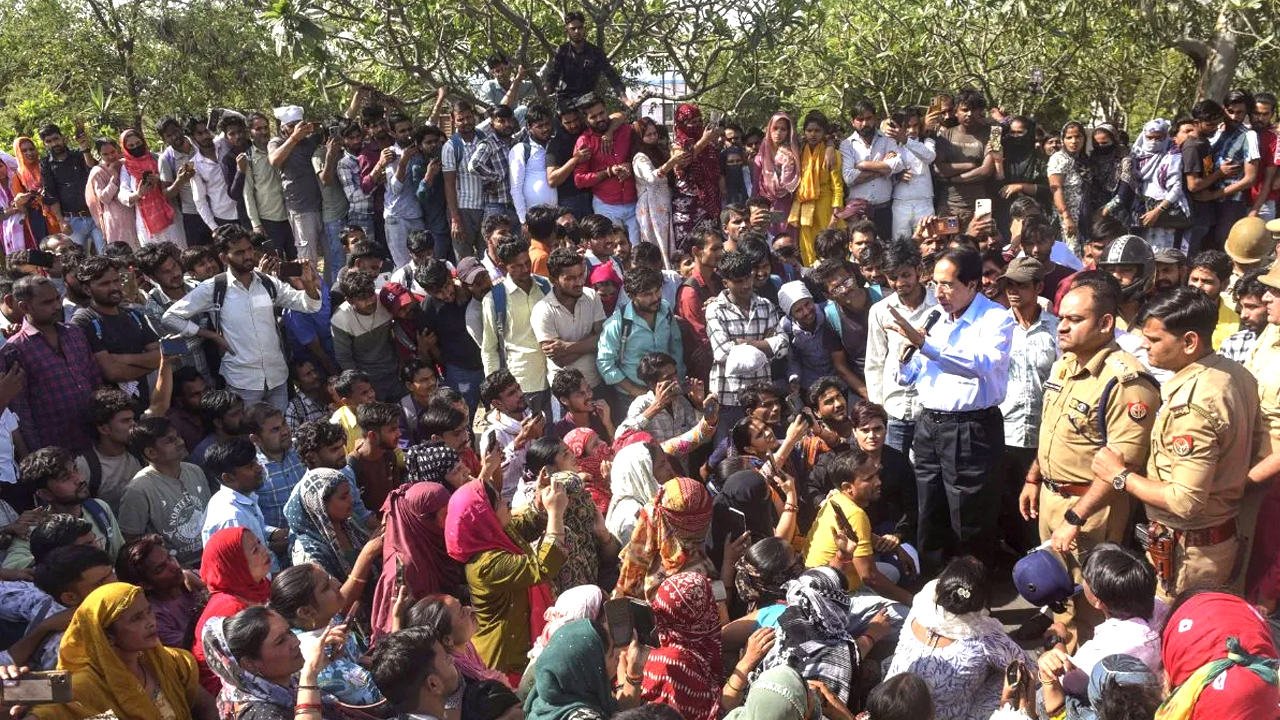
Over the past few months, a wave of worker-led protests has swept across India’s industrial belts—from refineries and factories to gig platforms and domestic workspaces. Triggered by stagnant wages, unsafe conditions, and deepening contractualization without labour rights, these struggles are not isolated eruptions but part of a broader awakening among the country’s working classes. Women workers, especially, have exhibited a significant presence within the protests and have raised their specific demands positioned at the intersection of class and gender. What is unfolding is not merely an economic demand for higher wages, but a collective assertion of workers’ dignity against systemic exploitation.
by Pritha Paul
April 22, 2026
In the past few decades, despite statutory protections and safeguards, India has moved steadily and rapidly towards contractualization as a result of the Liberalisation, Privatisation and Globalisation policies. The protest of permanent workers at the Maruti Suzuki Manesar plant in 2011–2012, which made headlines across the world, further gave rise to fear and distrust of permanent workers in the minds of industrialists, who saw contractualization as a method of preventing the unionization of workers.
Today, more than 40% of workers in India’s organized manufacturing sector are contract workers, allowing industries to exploit workers without extending any rights to them.Several companies, such as Maruti Suzuki, have also invented different labels for non-permanent workers, although they are engaged in the same kind of work. There are different categories of contract workers, based on no intelligible differentia—CW1, CW2, CW3. Then there are trainee workers who are hired as TW1, many of whom are rehired as TW2 and then as TW3. Apart from that, there are student trainees and apprentices, all doing the same work but receiving varied wages.
These various categories of workers have been imagined and put into practice to symbolically and actually keep workers divided, so that their identities and demands never align with one another. But fabricated differences are bound to fall short before the unifying forces of hunger and exploitation. In the past few months, in the industrial heart of India, across sectors, across genders, and across identities, workers—thousands and thousands of workers, contract workers, unorganized workers, domestic workers, gig workers—have spontaneously awakened and arisen to demand their dues from their “masters.” With their backs against the wall, they have raised their hands not to beg, but to seize the dignity that has been denied to them by the state-corporate nexus.
Background and the Beginning
Under Section 3(1)(b) of the Minimum Wages Act, basic minimum wage rates are mandated to be revised by the appropriate government at intervals not exceeding five years. In reality, however, many state governments do not revise basic wages for 10–15 years. The last basic wage revision in Haryana took place on 21 October 2015 and was effective from 1 November 2015. In Uttar Pradesh, the basic minimum wage was last revised in 2012, effective from 1 April 2012.
On 29 December 2025, a tripartite meeting took place between the Government of Haryana, representatives of industries, and representatives of trade unions. Though the trade unions demanded a revised minimum wage of Rs. 26,000/- per month from the existing Rs. 11,274/-, it was eventually agreed upon by all parties that the revised minimum wage would be Rs. 23,196/- per month.
In the meantime, workers’ protests broke out at the Barauni Refinery of Indian Oil Corporation Limited (IOCL) in Begusarai, Bihar, on 2 February 2026. In December 2025, the breaking of a crane belt at the refinery allegedly led to the death of a worker. Prior to that, in September 2021, a vessel exploded, injuring more than 15 people. Apart from safety concerns and fair compensation for workplace injuries, the workers also raised demands for the implementation of an 8-hour shift, the government-declared minimum wage, social security provisions such as PF and ESI, double overtime payment, as well as arrangements for basic amenities and facilities such as labour sheds, clean drinking water, clean toilets, and access to first aid. Almost all of these demands were reiterated in the workers’ protests in other parts of the country.
On 2 February itself, the management and the workers reached a 13-point agreement. However, the management breached the agreement and, on 8 February, filed a case against workers’ leader Lal Babu Rai and suspended him. On the night of 8 February, Rai was arrested from his home. The police refused to show Rai the FIR under which they claimed he had been arrested. Rai was blindfolded and locked up overnight. Protests within 500 metres of the plant were banned. On 9 February, upon learning about Rai’s arrest, workers went on strike, demanding his release. The intensity of the demonstration compelled the police to release Rai.
Central trade unions and farmers’ organizations had called for a national general strike to be observed on 12 February 2026 to protest against Modi regime’s “anti-worker, anti-farmer policies” and the new Labour Codes, which disproportionately favour corporates at the cost of workers’ rights, dignity, and well-being. On the same day, at the Guwahati refinery of IOCL in Assamcontract workers called for a strike to raise their demands for an eight-hour shift, a wage hike, safe working conditions, and social security.
On 21 February 2026, at the other end of the country in Haryana, a workplace accident at the Panipat refinery of IOCL led to the death of two workers and serious injury to another, whose leg had to be amputated. It has been reported that neither the management nor the contractor arranged for ambulances to take the workers to the hospital. The apathy of the management ignited the workers’ pent-up anger over years of exploitation and oppression.
On 23 February, between 30,000 and 40,000 workers began a protest at 11 a.m. at refinery gates 1 and 4. Even in the face of brutal police repression, the workers continued their demonstration. While the accident and the management’s response to it were the last straw that broke the workers’ patience, the resistance was long overdue, given the management’s history of criminally atrocious and illegal exploitation of workers.
The majority of the workforce at the refinery consists of contract workers who are excluded from job security and legal protections, work 12-hour shifts with no overtime compensation and have only two Sundays off every month, with irregularities in wage payments and social security benefits.
The charter of demands included:
- 8-hour shift
- Timely payment of wages between the 1st and 7th of each month
- Payment according to company board rates
- Regular and transparent provident fund deposits
- Double-rate overtime pay
- Full compensation and accountability in case of workplace accidents
- Basic facilities, including toilets, drinking water, and canteens
- National holidays and regulation of working days
To suppress the protest, network jammers were installed at the refinery to prevent communication between the workers. An FIR was also reportedly filed against 2,500 “unknown workers.” In an attempt to placate the workers, the management assured them that their demands would be considered. However, the workers demanded immediate action on their demands. Around mid-March, a notice was affixed outside the gate of the refinery accepting most of the demands. There have been reports that the management has been coercing workers to return to work.
Images and videos of the Panipat protest were being widely circulated on social media and quickly went viral. Inspired by it, several other regions witnessed widespread protests and demonstrations by workers. On 26 February, more than 5,000 contract workers hiredto work at an ArcelorMittal Nippon Steel India plant in Hazira, Surat, Gujarat by Larsen and Toubro (L&T), also a major contractor for IOCL, went on strike. Migrant contract workers of Asian Paints, Dahej, situated in Bharuch, Gujarat, raised similar demands on 27 February. Workers of the IOCL Bottling Plant in Salem, Tamil Nadu, also launched their own movement in solidarity with the Panipat workers. Labour unrest broke out on 12 March at the IOCL refinery in Vadodara, Gujarat, with similar demands being raised against L&T.
The Effect and the Cause
Amidst the discontent simmering among workers in Haryana, on 2 March, the state government finally, after more than a decade, announced the revised basic minimum wage rates during the new budget session. However, instead of the agreed-upon amount of Rs. 23,196/-, the state government announced the wage amount to be Rs. 15,220/- per month. Even then, no notification was issued to that effect upon the commencement of the new financial year. In March, gas prices also rose sharply due to the war between Iran and the USA. Many migrant workers were forced to flee to their villages in order to avoid starvation. Workers, particularly contract workers, who were already struggling to pay for rent and groceries due to high inflation and low wages, began to feel even more restless and uncertain about their condition. Contract workers from different companies began to take to the streets.
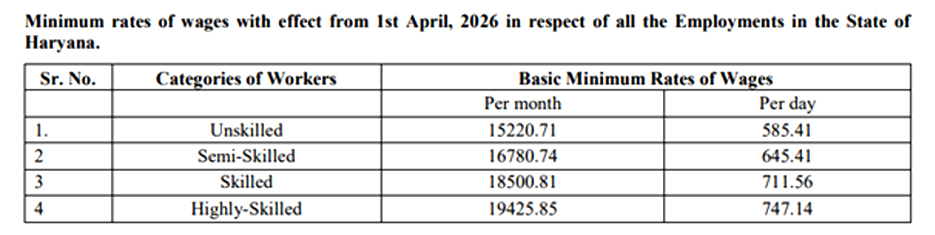
First, the workers rejected the unilateral modification of the wage rate by the government, which deviated from what had been agreed upon at the tripartite meeting. They deemed the wage hike inadequate to address current inflation rates and called the declared amount a “starvation wage”—wages insufficient for subsistence. Some unions have demanded Rs. 30,000/- as the revised wage. Second, they demanded that the revised wage rate be immediately implemented to alleviate some burden on the workers.
On 2 April, contract workers of Honda Company, Manesar, Gurgaon, began demonstrating. Soon, workers from other companies in Manesar-Gurgaon—Munjal Showa, Satyam Auto, Roop Polymers, Modelama, RichaCo, Richa Global, Pricol, Forza, Sarita Handa, Syrma SGS, among others—joined the protest and carried it forward. Word of mouth spread, as did images and videos from the protest sites, inspiring more and more workers to join the struggle. On 7 April, Section 163 of BNSS was invoked by the authorities to prevent workers from gathering and organizing. But this ploy failed miserably, and the workers refused to back down.
Fearing the intensity of the spontaneous outburst of the workers’ anger and sensing their militant mood, on 8 April, the Chief Minister of Haryana formally announced the increase in wages. On 9 April, the Haryana government notified the revised basic minimum income of Rs. 15,220/- with effect from 1 April 2026. The workers, however, had been cheated too many times to have any faith left in such notices. They refused to believe that this notification would be implemented by the companies. They demanded that factory owners affix the notice in their premises and announce its acceptance. The factory owners, on the other hand, have been refusing to do so.
It has been reported that on 9 April, during the workers’ protests, goons hired by the companies, in cahoots with the police, engaged in vandalism and arson, causing widespread chaos. Finding an excuse to attack the workers, police swung into action and injured many protesters. Around 56 workers were arrested, 20 were women. Two FIRs were registered for offences of conspiracy, unlawful assembly, rioting, and obstruction of a public servant. The first FIR, on behalf of the management of Modelama Exports Pvt. Ltd., implicates 45 workers. The other FIR, on behalf of the management of Richa Global Exports Pvt. Ltd., implicates 11 workers and additionally cites charges of arson and attempt to murder.
On 12 April, late at night, the police arrested six members of Inqilabi Majdoor Kendra—Shyamveer, Ajit, Pintu Yadav, Harish, Raju, and Aakash—and a social worker, Niranjan Lal, on charges of arson, attempt to murder, provoking riots, and being key conspirators in a criminal conspiracy, among others. Most of the arrested members had also previously been detained on two occasions—on 7 April from the protest site and on 9 April from their respective houses, with their phones seized—but were released due to lack of evidence. A member of Inqilabi Majdoor Kendra informed Groundxero that the state-corporate alliance has attempted to defame these activists by calling them “outside elements” instigating the workers. He called such claims blatantly false and emphasized the spontaneous nature of the protests, which he said are a result of the precarious realities of the workers and not due to the involvement of any union or organization.
He also emphasized that the arrested members are all local workers and activists who are well known in the area. They are not, in any sense, outsiders. For example, Ajit and Pintu Yadav are terminated workers of Maruti Suzuki’s vendor company, Belsonica in Manesar-Gurgaon, whose cases are pending along with other terminated and suspended workers. Aakash is a representative of the workers of Munjal Showa. Shyamveer has been working as a legal advisor in many companies in the industrial sector and is well known among trade unions and workers’ organizations. Upon being produced in court, they were remanded to 14 days of judicial custody and sent to Bhondsi jail in Gurgaon, Haryana. On the other hand, two activists from the Centre of Indian Trade Unions (CITU), Jai Bhagwan and Vinod Kumar, were served notices for their support of the workers’ protest, and several of their leader were placed under house arrest. It is pertinent to note that no action whatsoever has been taken against the company or factory owners who have illegally exploited workers in violation of several laws and continue to do so.
While the workers of Haryana were engaged in their own struggle, they once again became a source of inspiration for other states. They had compelled the Haryana government to announce a 35% wage hike. Though not sufficient to address their dire financial condition, it was a significant achievement realized through sheer determination and resistance. The news of their success—albeit partial but immensely significant—reached workers in neighbouring areas, who realized that they had begged for far too long, far too timidly, for far too little.
Not the Last, Not the Least
As soon as the Haryana government increased the minimum wage on 9 April, workers in Noida, Uttar Pradesh—just about 50 km away from Gurgaon—began their own demonstration demanding a minimum wage of Rs. 20,000/-. The protests began in Richa Global Export Company and spread to others such as Samvardhana Motherson International Ltd., Paramount Products Pvt. Ltd., and Anubhav Apparels. Over the next two days, the protest kept growing, with thousands of workers joining the strike. On 11 April, four activists from Majdoor Bigul were arrested—Rupesh, Aakriti, Srishti, and Manisha. Soon after, on 12 April, two lawyers, Prateek Kumar and Mohd. Tanveer Ali, who were trying to assist the activists, along with some others, were abducted from Surajpur Court and illegally detained.
On 12 April, the District Magistrate of Gautam Buddha Nagar, Noida, announced certain directions for industries—ensuring double overtime pay, a weekly off, double pay for working on Sundays, payment of bonus prior to 30 November, establishment of an ICC chaired by women, installation of a complaint box for workers, dignified treatment of workers, and payment of wages by the 10th of each month along with wage receipts. However, the District Magistrate failed to address the primary demand of the workers—the revision of wages, last undertaken 14 years ago. The workers refused to accept these reassurances and continued their protests. On the same day, the Chief Minister of Uttar Pradesh, Yogi Adityanath, stated that the workers’ protests may be part of a “larger conspiracy” to revive Naxalism.
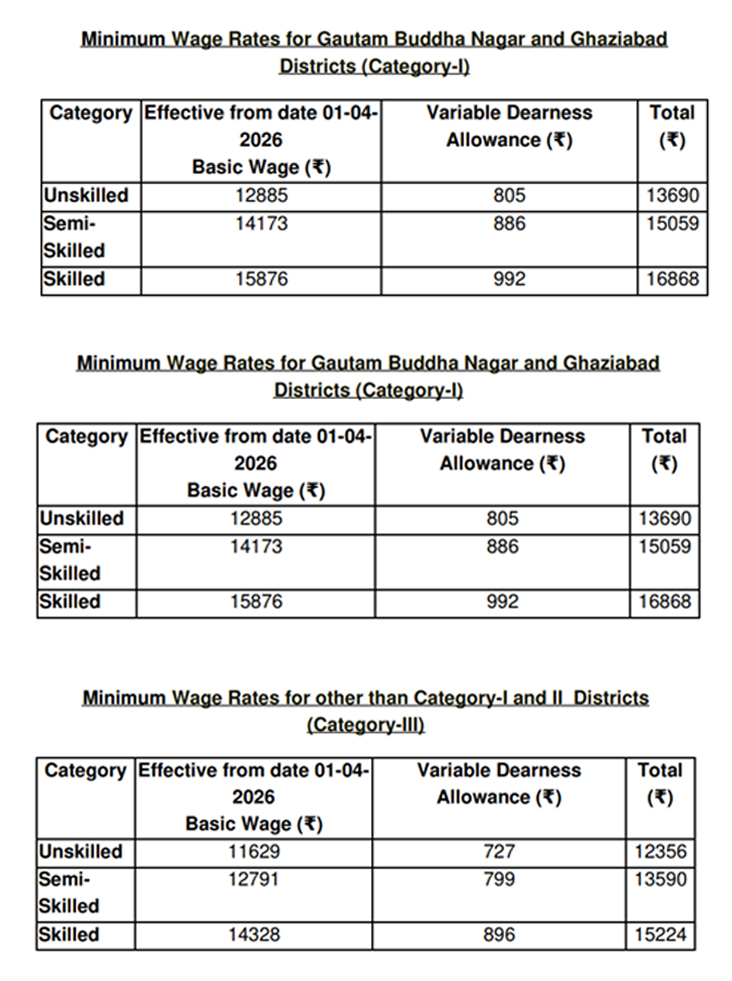
On 13 April, chaos ensued as workers’ distrust grew. There were reports of vandalism and arson. In the afternoon, poet Katyayani, and journalists Satyam Verma and Sanjay Srivastav were taken into custody by the Lucknow police. On the same day, UP Labour Minister Anil Rajbhar addressed the protest and stated that it was being investigated on the premise of being part of a “larger conspiracy” by elements linked to Pakistan. Interestingly, late on the night of 13 April, the UP government announced an interim wage hike of 21%—from Rs. 11,313/- to Rs. 13,690/-—all while unable to decide whether the protests are a result of “the menace of Naxalism” or “links to Pakistan”.
Despite the interim wage hike, the crackdown, and the arrests, workers persisted. The number of arrestees increased rapidly. On 14 April, Laxmi Singh said that more than 300 people had been arrested and seven FIRs had been registered, adding that more arrests should be expected. It is estimated that at least 350–400 protesters have been picked up by the police so far. On 14 April, Indian Express published an article uncritically reproducing the claims of the UP government—of Naxal and Pakistan links—and even referring to four arrested labour activists as “suspected terrorists,” revealing the apathy not only of the government towards the concerns of the workers but also of the mainstream media.
But the protests inspired more and more workers, even from different sectors. On 14 April, hundreds of domestic workers protested outside Cleo County, luxury residential apartments in Noida, demanding a wage hike. Speaking to The Hindu, they emphasized that their protest was spontaneous and a result of videos circulating on social media from the workers’ protests. The protests made them realise that their wages, too, had not been increased in the last few years, and that the only way to achieve a wage hike is through protest, given that they are not covered by or protected under any government policy. The domestic workers were shocked to learn that the government sets minimum wage limits for factory workers, while domestic workers are left to fend for themselves amidst rising prices. They lamented that their employers earn Rs. 3–4 lakhs a month but pay them, at most, Rs. 3,000/- and threaten to bar them from the society if they request a wage increase.
On 15 April, 40 female gig workers working with Urban Company held a demonstration outside a training centre in Sector 60, Noida. They informed Indian Express that their demands were not rooted in a wage hike. Instead, they sought an eight-hour shift, weekly time off, and access to essential facilities such as drinking water and toilets. Encouraged by the wave of protests and the government’s response, they decided to raise their concerns in the hope that the government would heed them as well. Several workers informed Indian Express of the difficulties they face in their work. One worker stated that the platforms set unrealistic targets that are impossible to meet. Another worker addressed the problems specifically faced by women. During menstruation, women need to change pads, but they cannot do so in customers’ homes, nor do the platforms provide any facilities to their workers. This leaves women in an extremely precarious condition. The women reported that they often work for 11 hours a day, while exceptionally high amounts are deducted from their wages if they skip work, even on weekends. Deductions are also made if they are late, “even by a minute,” or if they receive negative customer reviews. The latter can also lead to deactivation of the worker’s account, whereas complaints made by workers regarding customers are rarely addressed by the platforms. Oftentimes, their supervisors are unreachable, unresponsive, and unsympathetic to their plight. The police, however, disrupted their protest and removed the workers from the site, alleging that the women had been misled.
On 16 April, Laxmi Singh announced in a press conference that three people— Aditya Anand, a B.Tech graduate from NIT Jamshedpur, Rupesh and Manisha—were responsible for the events of 13 April. Police emphasized that none of the arrestees are labourers and protesting workers had not been arrested. This is proven to be blatantly false, as hundreds of workers’ families have been desperately searching for missing family members who were picked up by the UP police from various places in connection with the protests. The families have no information regarding the missing workers’ whereabouts, many of whom did not participate in the protests nor had any connection to the violence of 13 April. This statement by the police reveals the divisive politics of the BJP regime, wherein it attempts to separate protesting workers from theirsupporters in order to isolate the stakeholders and weaken their resolve. It is only when different sections of society unite that they form a formidable force against the state-corporate nexus and hold bargaining power—this is precisely what the ruling regime seeks to prevent.
On 18 April, the police arrested Aditya Anand from Tiruchirappalli railway station in Tamil Nadu. The next day, police alleged that Aditya had confessed to “his role in the conspiracy” in the Noida protest. The police also alleged that two ‘X’ accounts—@Proudindiannavi and @Mir_Ilyas_INC—were being operated from Pakistan to instigate violence during the protest. Another activist spoke to The Wire regarding these allegations and categorically stated that the government and mainstream media are spreading false narratives. She revealed that there are numerous videos proving that the arrested activists continuously appealed to workers to maintain peace and to thwart any attempts by the administration to provoke violence.
According to activists and lawyers, these narratives are being spread to create distrust in the legitimacy and credibility of the workers’ protest, which has successfully and deeply wounded the false pride of the state and the industry.
It is evident that the government was feeling the pressure. Even amidst the workers’ rejection of the interim wage hike and intensifying demands for Rs. 20,000/- as the minimum wage, on 17 April, the UP government notified the interim wage rate, thereby solidifying, at least unilaterally, the interim arrangement prescribed by the state. A new wage board is set to be formed to look into the wage issue after seven years of delay. The last wage board was constituted in 2014.
The move to hike workers’ wages has been denounced by the industry body as a decision made under pressure. Speaking to Indian Express, they expressed disappointment at not being consulted by the government and argued that the move has set a precedent that will encourage workers to protest for their rights. After nine years of not following due procedure, nine years of no attempt to raise minimum wages despite rapid inflation, and years of illegally increasing work hours, refusing overtime pay, and denying workers dignity and basic facilities, the industry is suddenly concerned about “proper procedure.”
The protests, meanwhile, have been spreading further and further, with no end in sight. Workers are angry. They feel cheated and desperate. Reports have been coming in from Bhiwadi, Pathredi, Chopanki, Kahrani, Khushkheda, Tapukara, and Neemrana in Rajasthan; Palwal, Bawal, and Faridabad in Haryana; Ghaziabad and Greater Noida in Uttar Pradesh; and Pantnagar in Uttarakhand—and these are only in the surrounding areas. Demands raised are on similar lines—wage hikes, overtime payment, holidays, better working conditions, basic amenities, and, above all, long-overdue dignity.
What Women Workers Want
These protests have marked a significant presence of women workers. During the past decade, the participation of women in the workforce has increased exponentially. In 2023–2024, the female labour force participation rate in India reached 41.7%. The current Modi regime, in its Viksit Bharat 2047 agenda, aims to increase this number to 70%. But does women’s participation in the workforce translate to women’s liberation—social, economic, or otherwise? In reality, we find that women workers are doubly marginalized in the workplace. They often form the low-wage labour pool, more often than not earning far less than their male counterparts. Industries and factories hire women in order to cut labour costs and increase their own profits. Women (and children) also occupy more precarious and less formal sectors—such as the bangle or firecracker manufacturing industries, and the garment or textile industries—where they are hired because of their physical stature and dexterity, as well as gender stereotypes: women are expected to be more compliant, docile, and less demanding or confrontational. Industries desire more labour at the lowest cost, and hiring women workers appears to be a solution for them.
Women, on the other hand, are often forced into the labour market not as a realisation of libertarian or egalitarian principles. But simply because, in today’s crumbling capitalist economy, a single source of income (traditionally, the man of the house) is insufficient to sustain a family. This compels women to take on both the burden of housekeeping and earning. Most workplaces neither have the will nor are adequately equipped to address the distinct issues faced by women; they are treated merely as instruments of profit. As a result, women face twofold exploitation, both at home and at the workplace.
Ranjana, a member of the Inqilabi Majdoor Kendra, spoke to Groundxero about the condition of women workers who have come out in large numbers to participate in the protests, particularly in Faridabad. She informed that most female workers are young, between 22 and 30 years old, and face several difficulties. Many of these difficulties are shared with their male counterparts, and they have participated—and will continue to participate—in the protests shoulder to shoulder with them. However, several problems are unique to their gender—problems that have persisted for a long time and for which the workers are now demanding tangible and effective solutions.
Ranjana stated that female workers earn significantly less than male workers. While men earn Rs. 11,000–12,000/-, only a few factories pay the same to women. In some factories, women earn as little as Rs. 6,000–9,000/-, and around Rs. 10,000–11,000/- only if they work for 10–12 hours. Across the industrial belt of Saroorpur in Faridabad, Haryana, women are paid around Rs. 7,000–8,000/- which risesto Rs. 9,000/- for 10–12 hours of work. On top of that, social security benefits are not extended to them. Many women do not insist on such benefits either, as the deductions would further reduce their take-home wages.
Ranjana revealed that most female workers are extremely fatigued. Even after working a 12-hour shift at the factory, they remain almost entirely responsible for household chores. She explained:
“They usually go to work at 8 am and return at 8 pm. In most households, the kitchen is still solely the woman’s responsibility. After returning from work, they cook and clean,care for the children and look after male family members who also work long hours. They typically finish housework around midnight and wake up again at around 4 am to prepare for the day. They cook and pack everyone’s tiffins and do other household work before leaving again for work at 8 am. The workers do not have Sundays off either, although the working hours may be slightly shorter—8 to 10 hours. So, the women often schedule washing clothes on that day.”
Speaking about working conditions, Ranjana emphasized the severe lack of basic facilities and sanitation in factories, which disproportionately affects women. There are several companies in Azad Nagar area in Sector 24 of Faridabad which are located near slums from where they hire workers. Many of these companies employ over 100 workers (including 50–70 women), but there are no toilets at all. While men resort to public urination, women are expected to wait until their lunch break to return to to their homes in the nearby slums to relieve themselves. In one instance, workers rely on a community centre washroom that is tremendously unhygienic, lacks water supply, and is overcrowded as almost all the female workers of this company use this one washroom. Most women workers, however, have no access to any toilet facilities at all.
Even in factories with toilets, facilities are grossly inadequate. Some have common toilets, anyway too few to serve the workforce. Even in companies with separate toilets, their numbers are insufficient. For example, Imperial Auto Industries in Faridabad employs over 400 workers, around 300 of whom are women, yet has only two toilets. Regulations require one toilet for every 25 workers. Section 19 of the Factories Act, 1948 mandates separate enclosures for men and women, “maintained in clean and sanitary condition at all times”. In reality, even the existing facilities are often filthy, leading to infections among women workers. Supervisors frequently deny or monitor toilet breaks, berate workers for “excessive” time spent which the supervisors often make notes of, and subject them to verbal abuse. Given the small number of toilets, the workers often have to wait their turn, which results in the management rudely chastising the workers. As a result, many women avoid using toilets altogether, leading to serious health issues, including urinary infections.
These conditions–lack of toilets, lack of sanitation, inability to take toilet breaks or spend the time needed for personal hygiene–prove particularly troublesome for women during menstruation, making them especially prone to infections. For most women, menstruation is accompanied by fatigue, painful abdominal cramps, aches in other parts of the body, migraines, digestive issues, mood swings, stress, diminished focus, other discomforts. However, women are denied adequate breaks during their shifts nor are they allowed to slow down their work. Menstrual leave is unheard of. Missing even a single day of work can result in wage deductions of Rs. 300–500/-. Consequently, women are forced to work through severe discomfort, fatigue, and pain.
And all for what? Their payments are often irregular—a common issue faced by all–sometimes delayed by three to four months. Workers who leave during this period forfeit their dues. Contractors frequently manipulate attendance records to underpay workers, forcing many to maintain personal diaries as proof of attendance. On the other hand, harsh working conditions also lead to severe health problems among women: widespread anaemia, stomach ailments, headaches, joint and muscle pain, and musculoskeletal injuries due to engagement with equipment designed for male bodies unsuitable for women. Workers face unrealistic production targets forcing them to work at an exceptional speed, contributing to stress, anxiety, and migraines—exacerbated by lack of sleep and irregular schedules particularly for female workers. In export units, where women are employed in large numbers, poor ventilation, lack of fresh air and dust exposure have even led to tuberculosis among the workers.
Finally, women workers face pervasive sexual harassment and abuse in the workplace. The nature of violence ranges from use of gendered abusive language to eve teasing to unwanted sexual advances to coerced sexual activities to rape to rape and murder. The list is inclusive. A key demand raised by the women workers is the proper establishment and functioning of Internal Complaints Committees (ICCs). “Women in factories have no knowledge of the Vishaka guidelines,” Ranjana noted. “They are not informed about the ICC or their rights. Even where committees exist, they are often non-functional. Even if women gather up the courage to lodge a complaint, they are frequently forced to resign or are terminated.”
Ranjana shared several examples of women workers’ experiences in the factories of Faridabad. Indo-British Garments Pvt. Ltd. is an export line company consisting mostly of women workers. The complainant, who had a permanent job was being verbally abused and sexually harassed by the plant head. She complained to the HR Manager and was pressured into a compromise wherein the plant head would apologise to her, and the matter would be dropped. But immediately afterwards, counter allegations were levelled against the complainant, and she began to be targeted and harassed. She was eventually forced to resign within a few months’ time despite holding a permanent job at the company. Ranjana reported that the complainant was never called in by the ICC with respect to her complaint and it can be safely assumed that there was no hearing by the committee whatsoever. There is a possibility that her complaint had not even been forwarded to the committee.
At Imperial Auto, an ICC has been constituted. A notice remains affixed in the premises to inform workers of the same. But the notice is in English, and the workers remain unaware of its contents due to lack of communication. Ranjana told us about two complaints. In one of the cases, both the complainant and the accused were workers. The management terminated both of them. In another case, the accused was a member of the management, who would drink on duty and harass the complainant on the floor. No action was taken on the accused. The complainant was terminated. “In both cases, the management said they ‘did not want drama’,” Ranjana explained. “The management thinks it is too much hassle if a woman complains and they do not want such a woman at work anymore.” If the accused is a fellow worker, it is more likely that he will be disciplined but where the accused is a “higher up”, next to no action is taken on the complaint. This reveals the different treatment meted out to the different classes–the class conflict. But women workers stand at the intersection of class and gender and are marginalized from both ends. No matter who the accused is, the complainant almost always pays the price.
For contract workers, the situation is even worse. Complaints are not allowed to be made, are often ignored, and identities of complainants are revealed to the accused, exposing them to further harassment. Instinctively, then, most women either choose to remain silent in the face of abuse or they leave their jobs. Even the composition of ICCs is biased, often favouring management interests.Ranjana explained, “Usually there are three members in the committee. One from the management, one from amongst the workers, and one external member who is supposed to be neutral. But obviously, the companies constitute the committees and appoint members who will favour the management. If we probe deeper, we will almost always find that the external member has some link to the management or is inclined towards favouring them. The companies will never choose external members from organisations which work for the betterment of the workers and who might challenge the management’s position.”
In another example, a company named Bhawani employs many women who work 12-hour shifts and endureextremely harsh behaviourfrom the management. They are too often exposed to foul language, profanity and gendered abuses. But there is no remedy, no relief. No one even knows if there exists a committee to begin with. There is no effective grievance redressal mechanism. A survey conducted by the Thozhi Federation among 300 women workers working in spinning mills, dyeing units and garment factories in Tamil Nadu found that 51% workers reported the absence of an ICC in their workplace, and 22% did not understand the purpose of such a committee. Further, 11% workers had no knowledge of EPFwhile64.3% stated that their employers did not contribute to it.
These protests have revealed to the nation the dire condition of the workers, irrespective of their identity. The working masses had been pushed to the edge – to the brink of destitution – under the impression that they would not revolt. But they retaliated with such fierce force and determination that it sent shivers down the spine of the capitalists and the rulers. The thousands of workers across states and sectors who spilled on to the roads after striking work present the moment when the invisible, the silent, the oppressed, the exploited, the “meek” rise up againstthe seemingly “omnipotent” exploiters and oppressors. A world which is founded on the backs and shoulders of the working classes can never thrive in the blood of its own makers. The protests are not a conspiracy. They are inevitable. The state-corporate nexus’ utmost fear is that the workers are waking up to this truth and are worried that they are preparing to take on the task of confronting the Goliath of capital.
Pritha is a lawyer and activist. She is part of Groundxero collective.
Also Read: Finally, the ‘Invisibles’ have started to become Visible