
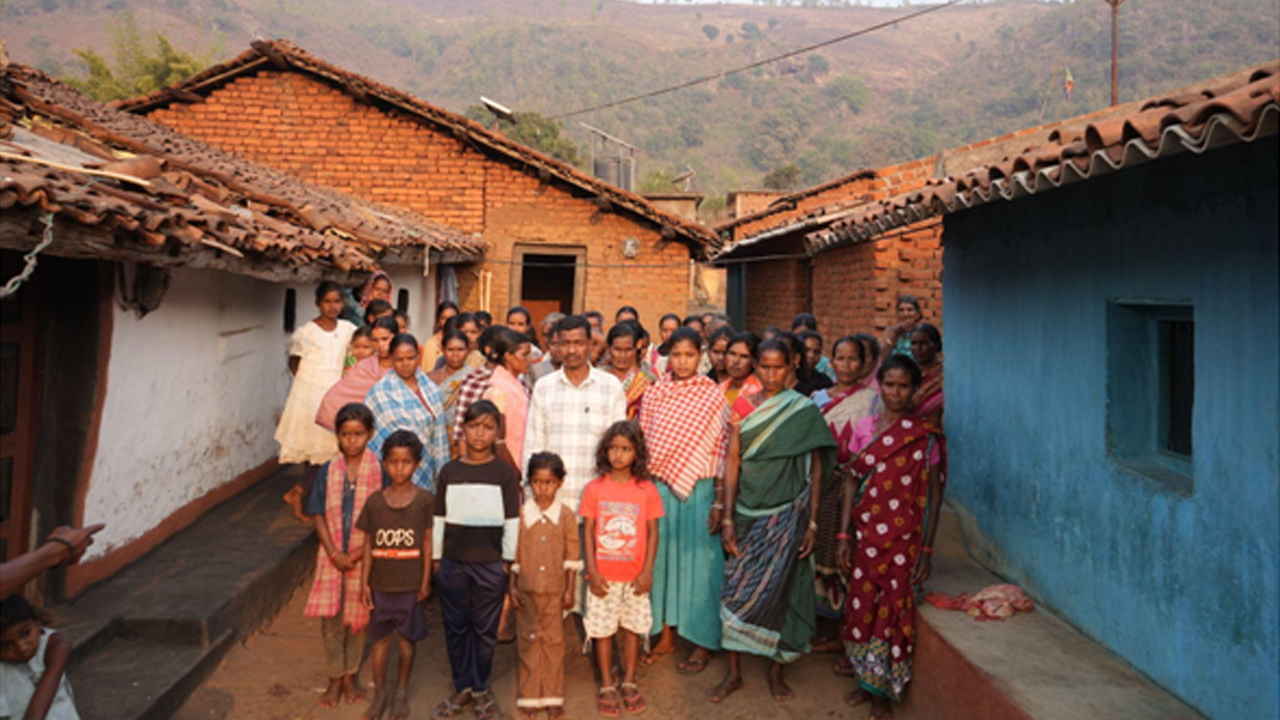
Talampadar must be examined as a case that exposes the deepening nexus between state power and corporate interests, where Adivasi dissent is increasingly criminalised and structural accountability remains absent.
Malika Singh
Groundxero | 26 March, 2026
In the hamlets of Rayagada and Kalahandi’s Scheduled Area (Schedule V), home to Kui-speaking Kondh Adivasis, Jhodia and Paraja Adivasis, as well as Dalit communities including Dom households, an escalating police presence has come to define everyday life.
Fifteen to twenty Bolero vehicles traverse the narrow lanes between the padas of Kantamal, Banteji, and Talampadar, among other hamlets, at least once a day.
Adivasi activists and community leaders, allegedly wanted by the police, spend much of their time hiding in the forested hill regions between Kutrumali, Majhimali, and Tijmali, three malis (mountains) that are sacred ancestral landscapes to the Kondhs and other Adivasis of the region.
Drone surveillance is emerging as a new and terrorising norm, alongside heavy-handed arrests of SC and ST community members.
In the early hours of March 11, between 2:30 and 3:30 AM, more than 15 police vehicles, led by the IICs of Kashipur and Karlaput police stations, surrounded Talampadar, a remote hilly hamlet inhabited by the Adivasi people of the Korsiya, Kadraka, Wadaka, and Sikoka clans.
By the end, 21 Adivasi men and women were arrested and driven 75 kilometers away to the District Jail in Bhawanipatna after being produced before the court of JMFC in Thuamul Rampurt on the afternoon of March 11.
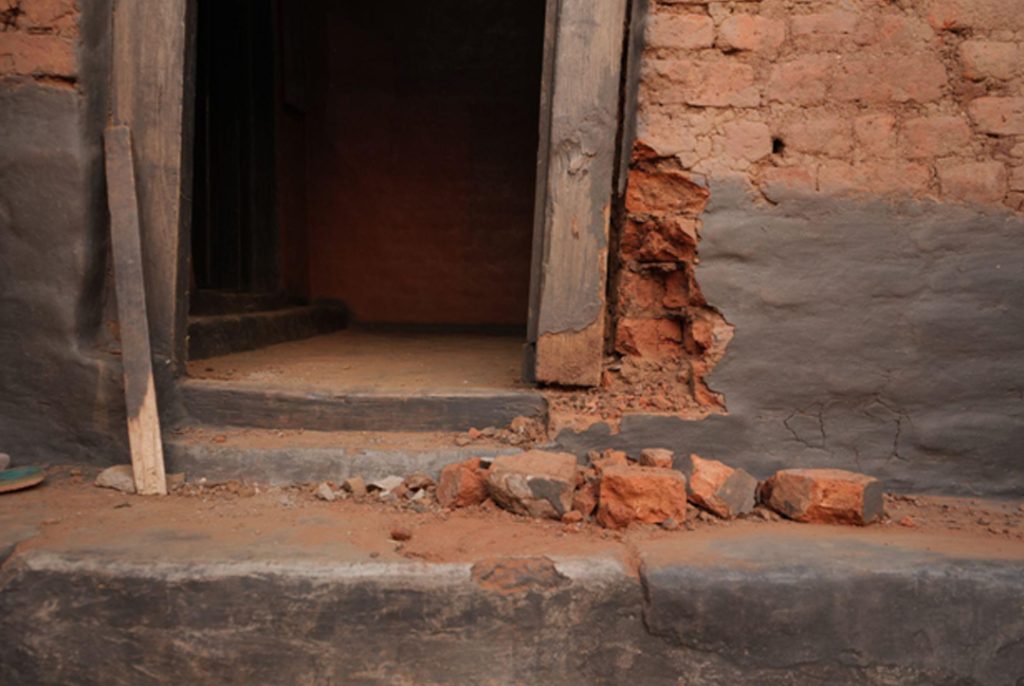
Reena Majhi, a resident of Talampadar from the Korsiya clan, whose husband is one of the arrested, showed Janabadi the 10 homes that the police barged into. Led by IIC Prashant Kumar Swain, the police platoons broke down wooden doors, iron latches, window panels, while young girls gave testimonies to being pulled out of their homes by their hair, and women being slapped by male police officers.
Among the 21 arrested are 10 women, which breaches the guidelines laid down in the D.K. Basu vs State of West Bengal, which mandate that women not be arrested at night. Furthermore, a 19 year old pregnant woman, Talampadar’s Disari, an Adivasi spiritual leader whose ancestral practice prevents them from consuming food not cooked within their own households, and three mothers of infants are also part of those arrested.
Many from the group have been at the forefront of an ongoing people’s movement against bauxite mining projects led by the Vedanta Group, and its sub-contractor Mythri.
Vedanta was appointed as the preferred bidder for a mining lease of 1,549 hectares in February 2023 by the Govt. of Odisha after an auction in November 2022, of which 708 hectares is bauxite rich forest land. This land is a sacred abode of Tij Raja, the supreme deity and spiritual presence for the Kondh community. Two Kondh villages of Malipadar and Tijmali sit on this land that is the people’s grazing land, source of livestock, fuel wood, medicinal plants, sacred groves and burial grounds, and water streams.
The events of March 11 arose from what may be understood as a common confrontation between two entities of a community.
One entity is those who are dalaal (traitors). Dalaals, simply put, are community members who operate as touts for a mining company in the region, which in this case is Vedanta. A dalaal, typically paid between 1500–2000 INR per month, takes photos and videos of meetings the MMMSM holds, its leaders, identify their residences and villages, advocate for Vedanta as a viable employment opportunity for villagers who oppose it, insinuate that doing so would prevent them from going to jail, and eventually disclose it all to Vedanta’s managerial staff on-ground.
The second entity comprises those who are members of Maa Maati Maali Surakhya Manch, a grassroots Adivasi collective that came together in 2023 with the sole aim of protecting their sacred mountains of Tijmali, Kutrumali, Majhimali from the perils of giant mining corporates. This collective is formed by Adivasi, Dalit and villagers from other communities of the Kashipur and Thumal Rampur blocks in Rayagada and Kalahandi districts, all of whom share a civilisational relationship with the mountains and its surrounding land. Talampadar falls within this region, sitting at the base of Tijmali.
Pabitra Naik was approached by Vedanta in September of 2023. Once a leading voice against Vedanta in the Tijmali and Niyamgiri range of Odisha, he eventually grew estranged from his community upon accepting the offer to operate as the company’s tout.
On the afternoon of March 11, Pabitra arrived in Talampadar with a DJ setup, blaring music that drew residents out into the open. As a family in the hamlet prepared for their daughter’s engagement, community members approached him and demanded that he leave. Pabitra refused.
Given the mounting frustration of having lost a community member to being a dalaal, what began as a confrontation evolved into a physical altercation between the villagers, Pabitra, and his relative Maheshwar Jal.
Finally, Maheswar Jal lodged an FIR at Karlapat Police Station and the same night, Talampadar lost 21 of its members to indefinite incarceration.
Villagers expressed that this was not the first time a company tout has tried to instigate a fight, that an altercation resulting in police force and a rampage of arrests constitutes a disproportionate response to a community conflict.
Moreover, these pre-dawn arrests cannot be viewed in isolation. It makes for the third major incident of arrests since November 2025 alone. MMMSM’s leader, Kartik Naik, was arrested on November 20 for a fabricated criminal complaint filed against him and about 50 others related to the celebration of Birsa Munda Jayanti on November 15. Tribal Pride Day commemorates the birth and the indigenous resistance led by Birsa Munda, for which villagers across Thuamul Rampur district had gathered to celebrate.
On that day, another verbal and physical altercation had erupted between dalaals and MMMSM members. The dalaals insisted on addressing the gathering though not invited, and spewed abuses at Samajwadi Jan Parishad leader and activist Lingraj Azad for not complying. By November 20, a stock FIR against Kartik and 50 others culminated in his arrest for resisting the intervention by dalaals as an act of violence.
The following week, on November 28, Labanya Naik, Kartik’s uncle’s older son was also arrested in the same case. Subsequently, three other voices of resistance from MMMSM were arrested by Karlaput and Kashipur Police between the months of December 2025 and March 2026. Mithun Naik, Umakant Naik, Laxman Naik, all Dalit community members, were subject to an inhumane pattern of arrests: 10 to 15 Bolero vehicles would enter villages, commence a manhunt with drone technology over local hills, and provide no memorandum of arrest at the time of detention.
As of March 26 2026, Kartik is out on bail, as are Laxman and Mithun, while Labanya awaits a release from Bhawanipatna District Jail after an announced bail in the last active case against him. Umakant’s first bail plea stands rejected, with an additional three cases to his name.
Finally, these arrests are set against the state’s pursuit to eradicate Naxalism by March 31, a deadline that has repeatedly witnessed over-surveillance of Adivasi neighborhoods, absence of judicial inquiry into police-violence against ST and SC community members, and series of arbitrary arrests. In this climate, Talampadar must be examined as a case that exposes the deepening nexus between state power and corporate interests, where Adivasi dissent is increasingly criminalised and structural accountability remains absent.
Malika Singh is an independent journalist and a remote MA student at SOAS University of London currently based out of Jaipur.
Feature image: Kondh community members of Talampadar on the morning of March 12, stand together against police brutality