
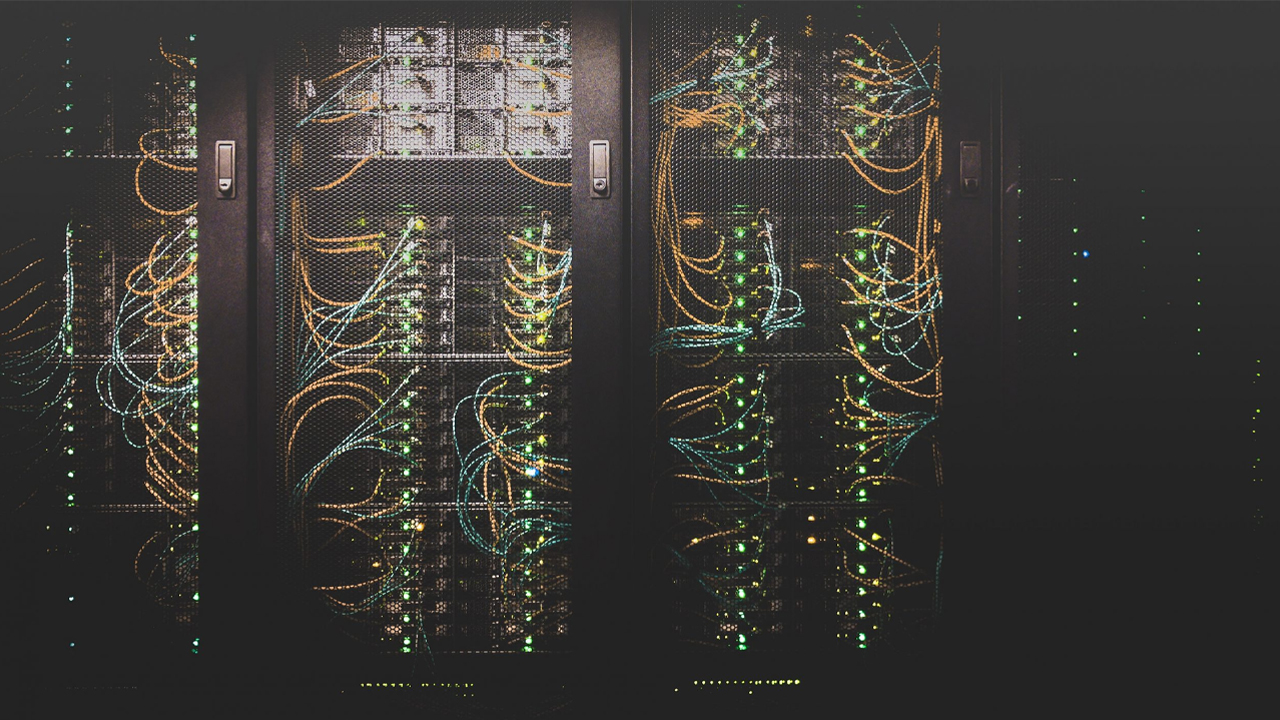
The Modi government has been inviting the world’s most toxic industries into India, and lately, the most hyped one has been building data centres that consume an insane amount of water and electricity, creating water crises in regions where they are set up.
By Shyamoli Jana
It is hard to find another government that is this eager to invite toxic industries into the country. While data centre projects are getting shut down or scrapped due to popular protests against them in places like Indianapolis, New Jersey, Wisconsin, our Vishwaguru wants those water-guzzling, electricity burning centres to be built in India. Not only that, the Modi government is planning a 20-year tax break for for data centres. So, basically, come to India, ruin its environment and pay nothing for 20 years – this is Modi’s plan for India with data centres.
Data centres do not generate employment at any significant scale, so the loud, stupid, corporate-propaganda-spouting section which has many Modi supporters too has nothing to gain – unless they somehow consider a water crisis and consequent soil poisoning a “business opportunity”. Knowing some of these people, I would not put such a notion past them – human stupidity truly is boundless. But what is far more important than the absence of employment opportunities is what data centres do to the places where they are built and run.
What data centres do to the places where they are built
Data centres require a massive amount of energy and cooling. Let us talk about the cooling part first. The technique used to cool data centres is evaporative cooling, where cooling is attained due to the absorption of the heat by water for evaporation. Most frequently, potable water is used for this due to the limited presence of materials in it which can damage the equipment. A single large data centre uses up to 23 million litres of water daily, the equivalent of the amount of water a town of 50,000 people uses.
In an article titled ‘I can’t drink the water’ – life next to a US data centre, residents and activists from Mansfield, Georgia described their water turning into sludge after Meta built a data centre there. Similar stories of water crisis are reported from elsewhere with AI data centres. Many Indian cities like Bengaluru and Chennai already suffer from serious water crises, and one can only imagine what adding more data centres would do to those cities. Many Indian villages rely on groundwater due to the lack of water supply infrastructure. Groundwater depletion caused by data centres in rural areas would usher in all kinds of health hazards due to the use of contaminated water as freshwater runs out.
Also, data centres use a huge amount of electricity. In the United States, data centres accounted for 4.4% of its total annual electricity consumption in 2023. We live in a country where many still do not have access to electricity, and the bulk of the sufferers of climate change are the poorest of the global population who get no benefit of carbon emissions. Now the government wants to build electricity-guzzling data centres that will dry up water resources and drive up carbon emissions, all for the benefit of big tech. It is worth recalling that companies like Google and Amazon provide the Israeli military with cloud computing and AI capabilities that are used to target Palestinians. On top of it, India relies majorly on ‘dirty’ power sources – i.e., highly polluting power sources – like coal for electricity generation. A greater demand on electricity means further ravaging of forests and greater pollution with no benefits for the overwhelming majority of the population. This is a move to further line the pockets of corporations while passing the huge cost on to the population consisting of many of the poorest of the planet.
Protests around the world against data centres – is India now the garbage dump yard of the world?
In the United Kingdom, campaigners have gone to court and brought the plan to build a hyperscale data centre near London under legal scrutiny for failing to consider its impact on climate change. In the United States, which is home to the largest number of data centres, construction and maintenance of data centres are meeting with protests against them by the local population that is footing higher electricity and water bills and seeing its water resources getting depleted. For instance, in Indianapolis, Google had to scrap its plan to build a $1 billion data centre after popular protests. In New Brunswick, protesters put a stop on a plan to build a data centre in the locality instead of a public park.
In India, importing toxic industries and calling it development is nothing new. For instance, one can read the report titled The Black Wind – How India Is Becoming the World’s Waste Tyre Furnace by the Reporters’ Collective, or the Deccan Herald piece titled Is India becoming the world’s chemical graveyard?. India imports garbage that many countries have banned from entering their shores. So of course, true to form, the Indian government is rolling out the red carpet and offering a 20-year tax break for the latest environmental hazard – data centres. The Yogi government of Uttar Pradesh that is known for jailing protesters and demolishing their houses, earning the name ‘bulldozer government’, has signed a contract for building six more data centres in the state.
Conclusion
It would be a mistake to think that it is only the BJP government that would allow data centres to be built in India. Such things would happen at any place that has not nurtured a culture of public involvement in securing the environment and public facilities. It must unequivocally be understood that those that scoff at a culture of strikes, organising and protesting are, knowingly or unknowingly, paving the way for unimpeded exploitation by the powerful. Your ‘successful’ cousin living in Bengaluru paying over a thousand bucks every month for water may screech about the need to overwork people and not pay them the minimum wage while 26% of vegetable samples in Bengaluru is found to contain lead. Your ‘hustling’ friend from Mumbai may be thrilled about kicking out ‘Bangladeshis’ or Muslims while Mumbai air turns toxic. But it does not take a genius to figure out that the busier the population is trying to survive, the less time it has for resisting. The government wants us to spend all our time working for the propertied class and being busy with private and government bureaucracies while it hands over our present and our future to the corporations. The labour law amendments, the vote chori, the SIR exercises must be seen as tools to consolidate a fascist takeover of the country in order to facilitate unrestricted capitalistic exploitation. Organised resistance is the only proper defence against it.
The author is a social activist.
Also Read Google-Adani Data Centre in Vizag a Looming Environmental and Economic Disaster, warns HRF