
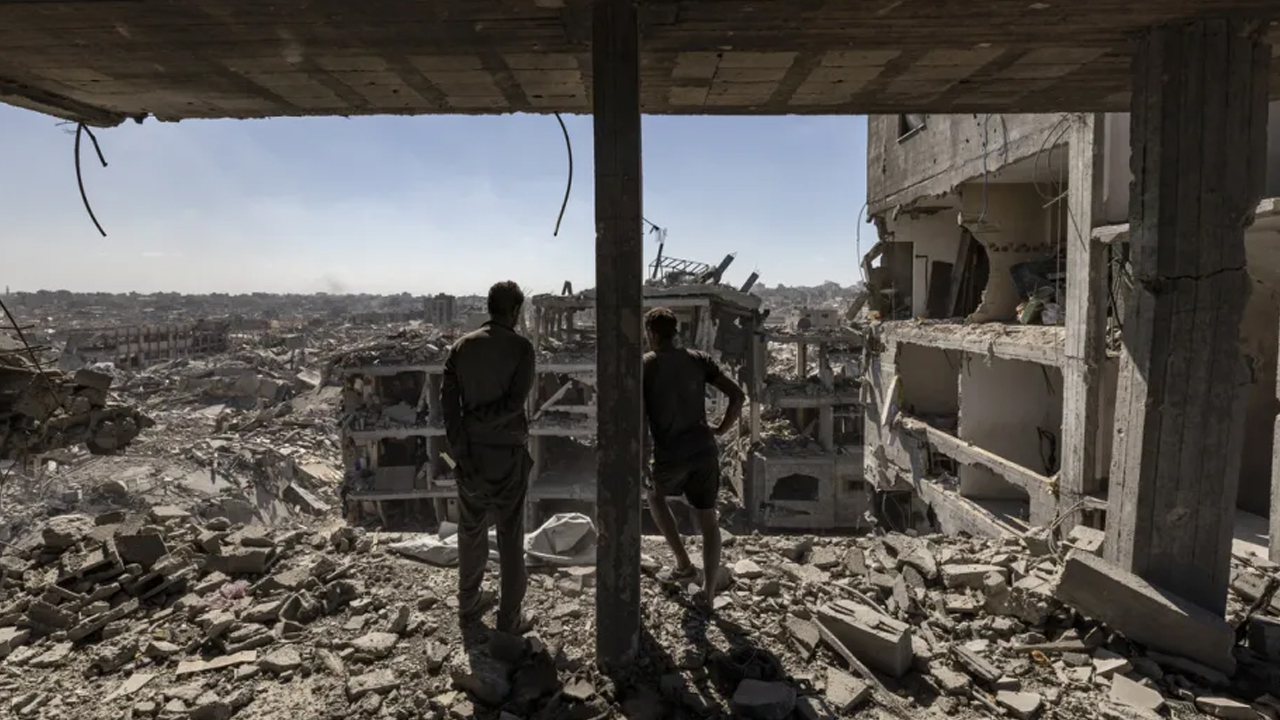
Amnesty International warns that Israel’s genocide against Palestinians is not over and despite a ceasefire Israel is still deliberately inflicting conditions of life calculated to bring about the physical destruction of the Palestinian population in the occupied Gaza Strip.
Groundxero Report | November 30, 2025
More than a month after a ceasefire was announced on 9 October 2025 and all living Israeli hostages were released, Israeli authorities are still committing genocide against Palestinians in the occupied Gaza Strip, by continuing to deliberately inflict conditions of life calculated to bring about their physical destruction, without signalling any change in their intent, said Amnesty International in a briefing released on Friday.
The human rights organization provided a legal analysis of the ongoing genocide along with testimonies from local residents, medical staff and humanitarian workers highlighting the dire ongoing conditions for Palestinians in the occupied Gaza Strip.
At least 347people, including 136 children, have been killed so far in Israeli bombings by its fighter pilots and attacks by its troops on the ground in Gaza since the ceasefire was announced on 9 October, 2025. Israel continues to deliberately obstruct and restrict access to critical aid and relief supplies, including medical supplies and equipment necessary to repair life-sustaining infrastructure. This inhuman and illegal behavior of Israel is an open violation of multiple orders from the International Court of Justice (ICJ) issued for Israel to ensure that Palestinians have access to humanitarian supplies. In January 2024, the ICJ found that Palestinians’ rights under the Genocide Convention, namely their survival were plausibly at risk.
Israel maintains severe restrictions on food, water, medical supplies, fuel, and essential repair equipment, preventing the restoration of basic life-sustaining services. Israeli authorities agreed as part of the ceasefire to allow 600 trucks of food and other aid into Gaza daily but it is only allowing in about 200 trucks per day, only a third of what was promised. Between 10 October and 13 November alone, over 6,480 metric tons of UN-coordinated aid was blocked. 55% of essential drugs are at zero stock, 71% of medical consumables have fully run out and 74% of chemotherapy and blood-disease drugs are unavailable in the Strip.
Israel’s systematic displacement of Palestinians from fertile lands has also continued unabated, with Israeli military currently deployed across around 54-58% of the Gaza Strip enforcing a “yellow line” that bars Palestinians from returning home or accessing agricultural land. At least 93 Palestinians attempting to cross back have been shot. The Israelis routinely shoot at Palestinian fishing boats, severely limiting Palestinians’ access to the sea.
Water infrastructure has been devastated: Gaza City now produces only one-third of its daily water capacity. Sewage systems cannot be repaired due to denied entry of pumps and spare parts, heightening the risk of disease and environmental collapse.
Israeli has even limited the import of tents into Gaza, with many Palestinians sleeping and living amid rubble, even as winter temperatures plummet and cold rains slice down on children and families.
These limitations and restrictions, apart from the military strikes killing civilians, even during the ceasefire, are the result of deliberate Israeli policies of slow-rolling the entry of aid into Gaza on orders from Prime Minister Benjamin Netanyahu and his extreme-right cabinet. As a result, thousands of children in Gaza Strip are undernourished or experiencing food insecurity.
Altogether, Israel’s pattern of conduct in Gaza, including the deliberate, unlawful denial of lifesaving aid to Palestinians, means, “Palestinians are left virtually totally deprived of independent access to forms of sustenance,” worsening an already catastrophic situation intensified by 18 years of blockade and two years of extreme military destruction by Israel.
The Secretary General of Amnesty International, Agnes Callamard, said that: “The ceasefire risks creating a dangerous illusion that life in Gaza is returning to normal. But while Israeli authorities and forces have reduced the scale of their attacks and allowed limited amounts of humanitarian aid into Gaza, the world must not be fooled. Israel’s genocide is not over.”
Amnesty notes no shift in Israel’s policies, rhetoric, or conduct: Dehumanisation of Palestinians continues; new death penalty legislation disproportionately targets Palestinians and a systemic apartheid, arbitrary detention, and torture persist across the occupied territories.
Amnesty called for a halt to all arms transfer to Israel until it cease committing war crimes, and allow journalists and human rights monitors into the Strip. The report concludes by stating that the ceasefire must not “become a smokescreen for Israel’s ongoing genocide,” and stressed that world leaders must demonstrate that they truly committed to prevent the genocide and end the impunity that has fueled decades of Israeli crimes across the Occupied Palestinian Territory.