
With the labour codes notified and the government signalling no sign of retreat, an open confrontation between India’s working class and a Corporate–State nexus intent on dismantling the last protections of labour law seems imminent.
Groundxero Report | 26 November 2025
Thousands of workers, farmers and agricultural laborers staged protests across the country today against the anti-worker anti-farmer policies of the BJP-led Union Government, particularly against the unilateral notification of the Labour Codes and the betrayal of promises given to the farmers by the Narendra Modi led union government. Today’s protest mobilisations took place following the joint call of the 10 Central Trade Unions (CTUS) and the farmers’ body Samyukt Kisan Morcha (SKM).
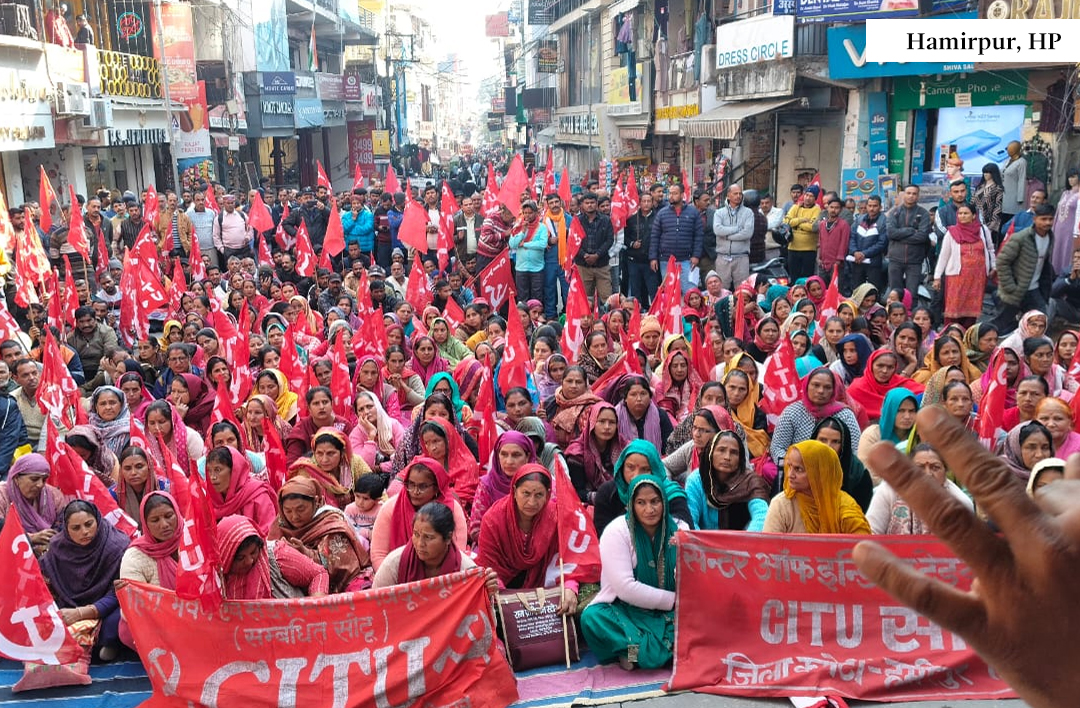
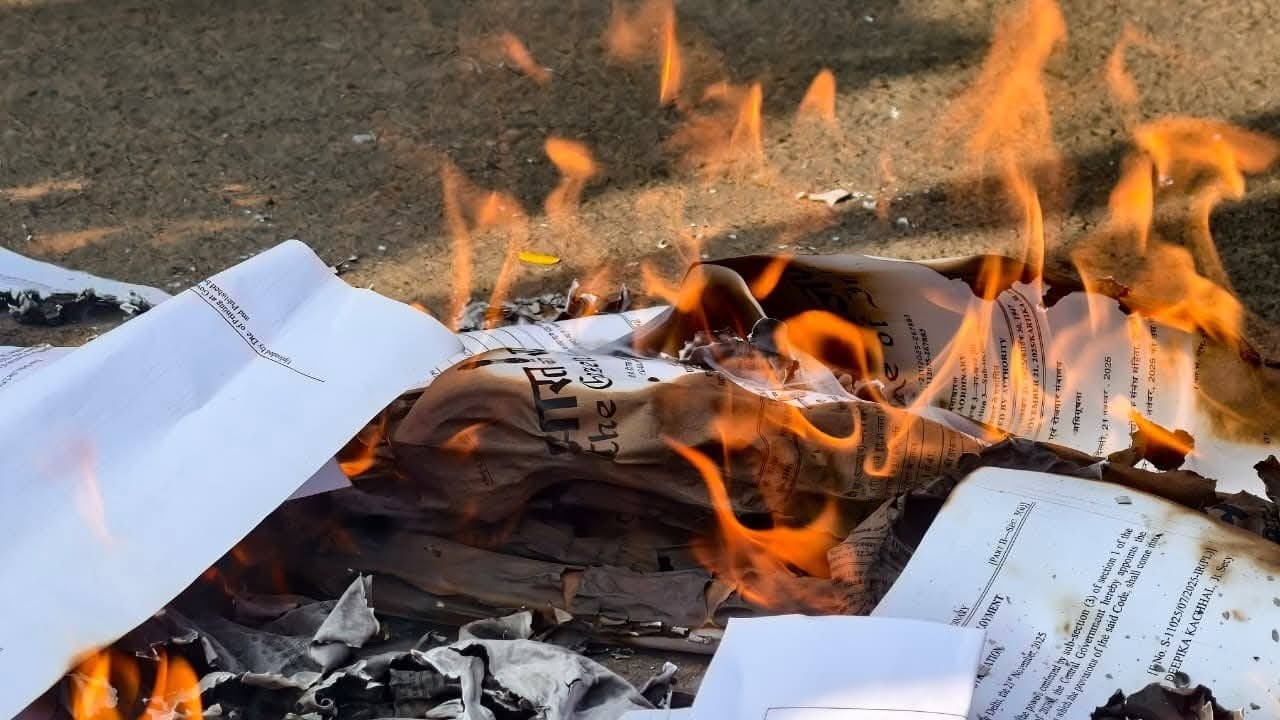
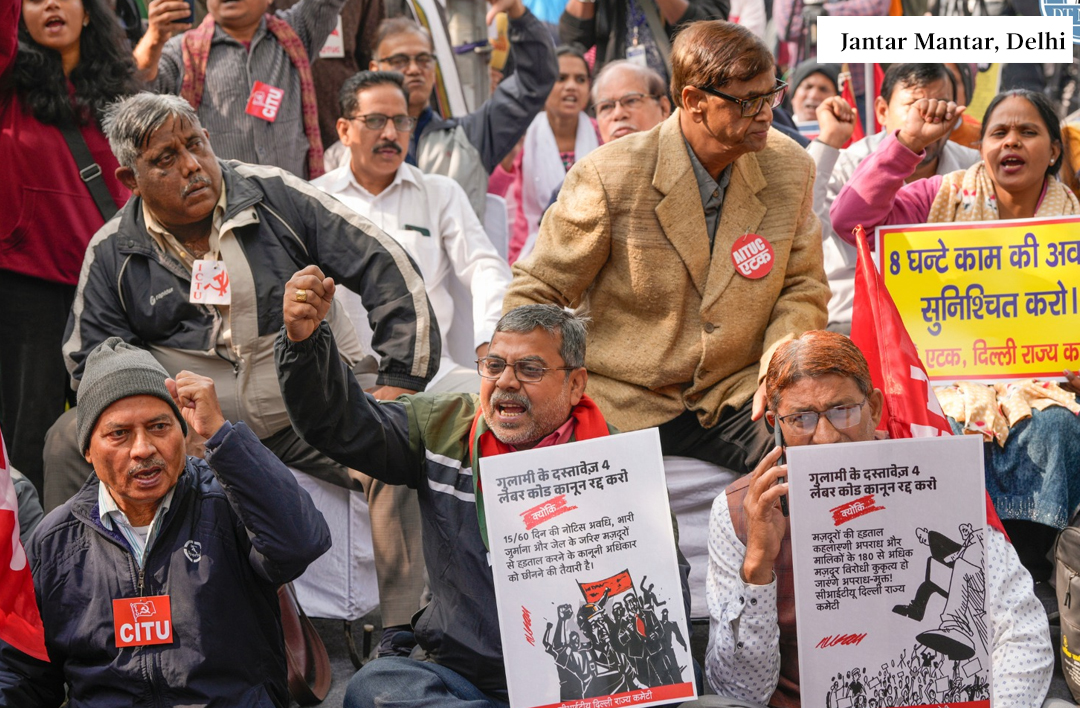
Today’s protests marked the first major show of resistance since the labour codes by the workers which were notified by the government on November 21. Workers across the country staged marches, held demonstrations and protest meetings against the four new labour codes. Copies of the Labour Codes notification issued unilaterally by the Union government were burnt by workers and farmers at different places. The All India Power Engineers Federation (AIPEF) also actively took part in the protests to express their opposition to privatization push of the public sector power units. Unions said turnout was strong in public-sector units, coal fields, transport and some auto and textile hubs. A protest was also organised at Jantar Mantar in New Delhi by the unions and kisan organisations, which was addressed by national and state leaders.
While the Codes took effect on Friday, five years after being passed by parliament, the full rollout will depend on when the states notify and implement their rules. The four labour codes merge 29 labour laws covering wages, industrial relations, social security and workplace safety. All major workers unions have denounced the codes as “anti-worker” and “pro-employer”, accusing the government of launching a vicious attack on job security, collective bargaining and workplace protections. The unions consider these labour codes as negation of the labour rights won over after struggle of 150 years.
On Friday, when the notification of the codes was announced, the Joint Platform of 10 Central Trade Unions (CTUs) in a strongly worded statement has termed the Union government’s sudden notification of the codes as a “deceptive fraud committed against the working people of the nation.” The CTUs had described the new codes as: “Genocidal attacks on the lives and livelihoods of workers… seeking to impose virtual slavery and snatching away every right and entitlement.” “The codes, if implemented, will extinguish the hopes, faith and aspirations of entire generations to come,” said the unions.
The joint platform had called on the working people of India across the sectors to rise in rage in the joint action of combative resistance and defiance on 26th November 2025 along with the peasants led by Samyukt Kisan Morcha (SKM), against the implementation of labour codes. Responding to that joint call of CTUs and SKM, today, thousands of workers in both organized and informal sector, agricultural labourers and peasants mobilised in over 500 districts, delivering a challenge to what they call the Modi government’s corporate–authoritarian restructuring of the economy.
At Jantar Mantar, in New Delhi, worker’s and farmer’s leaders declared that India’s working people had “entered a new phase of resistance.” In their official statement, released today, the CTUs and SKM emphasised the scale and depth of today’s mobilisation:
“Today all over the country there was massive mobilisation in protest against 4 labour codes and the anti-farmer policies of the central government… in government, public sector enterprises, industrial areas, in rural India and at block and sub-division levels.”
Across industrial belts in many states, today, workers marched alongside local kisan unions. Today marked the fifth anniversary of the historic farmers’ siege of Delhi’s borders in 2020. SKM which led that farmers’ movement has acuused the Narendra Modi government of “betraying” it’s written commitment to farmers given on 9 December 2021, and deepening policies that “ruin agricultural self-reliance and food security”. The SKM has also accused the Union government of favouring corporate, pointing out that while corporate entities saw loan waivers worth Rs 16.41 lakh crore in the last decade, “not a single rupee” of farm debt has been written off.
SKM has called the newly notified Labour Codes “an assault on the constitutional rights of workers”, legalising a 12-hour workday and curtailing the right to unionise and strike. “The four Labour Codes… have legalised fixed-term employment, 12-hour work day and denial of the right to union and to strike,” SKM stated.
By aligning farmers’ demands with workers’ rights, SKM is trying to construct a broader platform of peasants and workers that challenges the government’s policy architecture itself—not just specific agricultural crisis.
The CTUs and SKM stressed this deepening unity and said that today’s widespread protests were not a sectoral action but a cross-class rebellion involving urban and rural working people:
“The workers and farmers, the two productive forces of the country, are strengthening their solidarity… developing united actions.”
Worker unions shredded the government’s claims of “ease of doing business,” describing the labour codes as a corporate shock doctrine imposed through stealth. Their joint statement was explicit:
“These codes negate our right to strike, make union registration problematic, de-recognition of unions easy, wind up labour courts, and give registrars overriding powers to de-register unions.”
On the dilution of workplace safety they pointed out:
“The Occupational Safety and Working Conditions Code puts the right to safety and workplace entitlements in total jeopardy… inspections have been done away with and facilitators to facilitate employers are being brought.”
The CTUs and SKM made a direct accusation that the government is using communal polarisation to weaken resistance:
“The politics of polarisation and communal hatred is being used by the ruling dispensation to keep themselves in power, endangering the very basis of the Indian Constitution.”
They framed today’s mobilisation as a struggle not only for wages and rights but for the survival of secular democracy. They urged the working people, the common to reject the politics of hatred and struggle for their agenda of day-to-day life issues, affordable education, health, shelter, clean drinking water, sanitation, employment, decent wages, social security, pensionary benefits as old age security etc.
In a memorandum submitted to the President Droupadi Murmu, today, the unions said, “protests were part of a wider worker-farmer mobilisation against anti-worker, anti-farmer policies”.
With the labour codes notified and the government signalling no sign of retreat, an open confrontation between India’s working class and a Corporate–State nexus intent on dismantling the last protections of labour law seems imminent. The joint platform issued a forceful warning:
“It is a strong warning to the anti-worker, anti-farmer Modi Government. If there is no immediate action on the burning demands, there will be more massive, determined pan-India protests in the near future.”
________________
Feature Image: Workers burn copies of the official notification of the Labour Codes.
* The statement issued to the press on 26th November 2025 at New Delhi in regard to the nation-wide protest by the ten Central Trade Unions and Samyukt Kisan Morcha is given below:
- Nationwide Massive protest organised by the Trade Unions and Samyukt Kisan Morcha in more than 500 districts
- Demand Withdrawal of Four Labour Codes and the anti-farmer policies
Today all over the country there was massive mobilisation in protest against 4 labour codes and the anti-farmer policies of the central government in the formal and informal sectors, in Government, Public sector enterprises, and industrial areas, in rural India and also at block-sub-division levels by informal sector workers, agricultural labour and farmers and other sections of common people. Participation of students and youth was quite visible in many states.
The workers and farmers, the two productive forces of the country are strengthening their solidarity support to each other as well as developing united actions. The 9th July 2025 Nationwide General Strike called by the platform of Ten Central Trade Unions, independent Sectoral Federations and Associations and the mobilisation by Samyukt Kisan Morcha (SKM) and the organisations of agricultural workers had further strengthened this bond in the interest of working masses and the nation at large.
The protesters expressed themselves against the rising inequalities in the face of unprecedented price rise of essential commodities, rising unemployment and underemployment leading to desperation, increased suicides of casual labour and the unemployed youth.
The government has not been conducting Indian labour conference for last 10 years, violating international labour standards and continues taking decisions in contravention to the interest of labour force and on 21st November 2025, the Four labour codes were notified abruptly to favour employers in the name of ‘Ease of doing Business’.
The trade unions consider these labour codes as negation of the labour rights won over after struggle of 150 years from British Raj onwards. These codes negate our right to strike, make union registration problematic, de-recognition of unions easy, the process of conciliation and adjudication cumbersome, winding up labour courts and introducing tribunal for workers, overriding power to registrars to de-register unions. The definition of wage being changed and the schedule of occupations for minimum wages applicability being abolished. The Occupational Safety and Working Conditions code designed to put the right of safety of every worker and also rights and entitlements of workers in workplace in total jeopardy, the inspections have been done away with and facilitators to facilitate employers is being brought. The changes in Industrial code and its rule for increasing applicability-threshold from 100 to 300 would push out 70 percent of industries out of the coverage of labour laws, the threshold changes in factory act from 10 to 20 where power is used and 20 to 40 without power would throw out substantial number of workforce from the coverage of labour laws, giving the employers, the wide discretionary powers to repress and exploit.
There is no labour protection in fixed term employment as it is fully devoid of labour law protection. Unlimited apprenticeship and no compulsion of absorption is another way of exploitation. The violations by employers are being decriminalised whereas criminalization of trade union leaders is on the cards. The Jan Vishwas bill replaces criminal ‘fines’ to civil ‘penalties’ shifting 288 provisions from criminal prosecution to administrative enforcement. Violations become ‘contraventions’ instead of ‘offenses’ stripping away imprisonment clauses and criminal sanctions.
The new system will introduce ‘improvement notices’ to offenders in almost 76 offenses under 10 Acts. This replaces immediate fines and initiation of criminal proceedings. The judicial proceedings will be done away and the designated officer will adjudicate the penalties. The labour courts are to be winded to be replaced by tribunal system. The interventions at the high Court level in certain matters which are available at present will also be taken away.
The limit of contractor licence proposed to increase from 20 to 50, outsourcing and contractorization being made normal. The recruitment of sanctioned posts not being done rather there is a ban on creation of new posts leading to rising unemployment, trend of appointments of retirees instead of regular employment to unemployed youth etc.
The unions are asking for immediate recruitments in the sanctioned posts lying vacant in all Govt departments and PSUs, creation of more jobs in industries and services, increase in days and remuneration of MGNREGA workers and enactment of similar legislation for Urban areas. But the government is busy imposing ELI scheme to incentivise employers instead. in order to subsidise their labour cost and informalize the workforce. In Government departments and in public sector, instead of providing regular appointments for youth, the policy to recruit the retirees on the one hand and appointing fixed–term/ apprentices/ trainees/ interns in the core jobs on the other, is being brought as witnessed in Railways, NMDC Ltd, Steel sector, teaching cadres etc. This is damaging to the growth of the country where 65 percent population is below the age of 35 years and the numbers of unemployed is maximum in the age group of 20 to 25 yrs.
The government is making fraudulent claims on employment and provisions of social security. The existing social security schemes are dumped into the labour code on social security.
The politics of polarisation and communal hatred is being used by the ruling dispensation to keep themselves in power, endangering the very basis of Indian constitution, the secular democracy, respect to diverse cultures, beliefs and languages, freedom of expression and dissent as the core values. The working people, the common masses must reject the politics of hatred and struggle for their agenda of day-to-day life issues, affordable education, health, shelter, clean drinking water, sanitation, employment, decent wages, social security, pensionary benefits as old age security etc.
The people should strengthen the movements to stop the corporate loot and save their public sector/ public services, jal-jungle-jameen as national assets for the good of the people and the nation.
CTUs and SKM strongly protest the cowardly attack on the worker- farmer demonstration by BJP goons at Dharmanagar North Tripura District. CITU state Vice President Amitava Datta and AIKS State Executive member Ratan Roy and seven other activists were attacked. CTU and SKM demands the Chief Minister Manik Saha to take immediate action against the criminals and warn the BJP no violence on peaceful democratic mass protest will be tolerated.
CTUs and SKM have congratulated lakhs of activists who have made the protest great success across the country. It is a strong warning to the anti- worker, anti farmer Modi Government and if there is no immediate action on the burning demands there will be more massive, determined pan-India protests in the near future.
Issued by-
Platform of Central Trade Unions and Sectoral Federations and Samyukt Kisan Morcha