
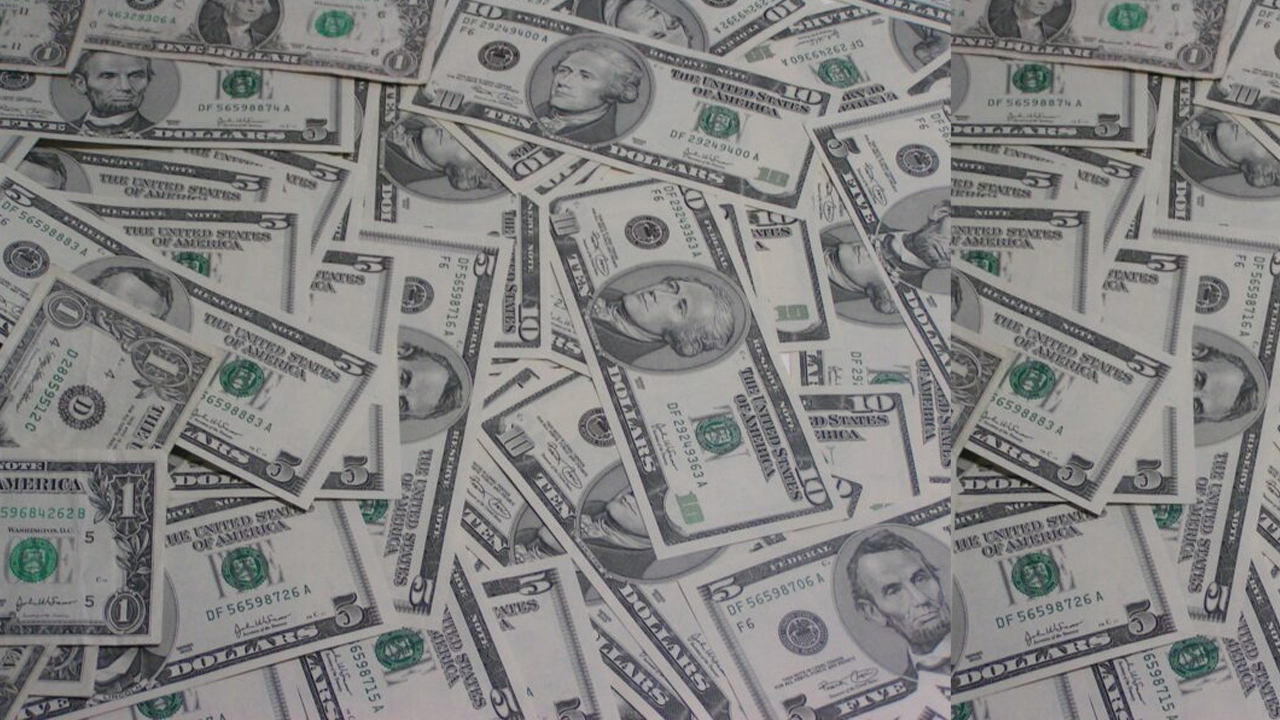
How the US dollar’s status as the world’s reserve currency allows America to export its inflation and live beyond its means – at everyone else’s expense
By Jaime Bravo and Jorge Coulon
In August 1971, then-US President Richard Nixon announced the suspension of the dollar’s convertibility into gold.
This closed a cycle that had begun with the Bretton Woods agreements, which gave the United States – the only industrial and financial power to emerge with its capabilities intact and as a creditor to the rest of the world – the possibility of making its currency the global reserve of value.
But even with that American weight, it had to compromise on gold backing and, to do so, concentrate the reserves of Western countries. No one was willing to hand over the reserve currency printing press to a single country.
With the gesture of breaking convertibility – the so-called Nixon Shock – the Bretton Woods system that had provided stability to international trade since the end of World War Two collapsed. The gold standard, which guaranteed that each dollar could be exchanged for a fixed amount of precious metal, was left behind.
Since then, the dollar has been sustained solely by ‘confidence’ in the US economy and the political and military power that backs it.
But that’s not all. Coercion to force its use led to the birth of petrodollars. Nixon himself signed an agreement with Saudi Arabia, whereby that country – the leading oil exporter at the time – would only accept payments in US dollars. In exchange, the US would guarantee Saudi Arabia’s security.
The high dependence of the world’s economies on oil ensured the permanence of that currency as a reserve and also as the most universal means of international payment.
Exorbitant privilege
This shift to a currency based on ‘trust’ ushered in a peculiar financial order: the currency of a single country became the global benchmark.
With this, Washington acquired an unparalleled privilege: it can print dollars at will, without the world rejecting them. In fact, the world demands them. Central banks, governments and companies need dollars to trade, save and borrow. What for any other nation would be a sure recipe for inflation, for the US becomes a mechanism for global financing.
The then-finance minister – and later President of France – Valéry Giscard d’Estaing dubbed this situation “exorbitant privilege”.
And he was right: thanks to the hegemony of the dollar, the US can live beyond its means, financing its fiscal and trade deficits with paper – or digital records – that others treasure as if they were gold.
How the machinery works
The machinery operates in a simple and brutal manner. As we have seen, oil and most other commodities are traded in dollars. International debt is issued in dollars. Central bank reserves are held in dollars. Thus, every country in the world pays a kind of ‘tribute’ to the centre of the system.
When the Federal Reserve expands the money supply – as it did after the 2008 crisis or during the 2020 pandemic – it injects liquidity that travels beyond its borders.
Some of those dollars circulate in the global economy, putting pressure on prices and devaluing local currencies. Others return to the US in the form of purchases of Treasury bonds, considered the safest asset on the planet. In both cases, Washington wins: it finances its debt at low cost and exports part of its inflation.
Not all the blame lies with the dollar
It is worth qualifying this point. Global inflation cannot be explained solely by US issuance. Other factors are at play: wars that disrupt supply chains, oil price hikes, pandemics that disrupt production, financial speculation, and each country’s internal policies.
But the dollar acts as an amplifier: its status as a global reserve currency means that the costs of US decisions are socialised on a global scale.
When the Federal Reserve raises interest rates, for example, capital flees from emerging countries to Treasury bonds, strengthening the dollar and weakening national currencies. This makes imports more expensive, increases the cost of external debt, and directly hits peripheral economies.
It is a reminder that the monetary sovereignty of the Global South is tied to the decisions of a central bank that responds solely to the interests of the US, with executives from the private financial world and a president appointed by the executive branch.
Invisible financing
The result is paradoxical: the entire world finances the US deficit. The most indebted country on the planet remains, at the same time, the most solvent in the eyes of the markets. Not because its accounts are in order, but because it can always pay in the currency that only it issues.
It is as if everyone else willingly accepted to be eternal creditors of a power that never intends to repay them in gold, but only in its own printed promise.
How long will this last?
The big question is how long this scheme can be sustained. Attempts are already being made to build alternatives: the Chinese yuan or RMB, the Brics initiatives to trade in local currencies, or even central bank digital currencies. The euro, although important, has not managed to displace the dollar from its throne.
The dollar’s hegemony is not just an economic issue: it is a device of power. The US not only prints the currency that everyone uses; it can also block transactions, apply financial sanctions and exclude entire countries from the payment system. War and finance are intertwined on the same battlefield.
Meanwhile, the rest of the world bears the costs: imported inflation, more expensive debt, recurring currency crises.
The conclusion is uncomfortable but clear: we live in an order in which the issuer of the world currency spends what it does not have, and the rest of the planet pays the bill – increasingly with what it does not have either: growing debt and mortgaged sovereignties.
Perhaps the 21st Century will see the emergence of a new monetary equilibrium. But as long as the dollar continues to reign, the paradox will persist: the US produces deficits and the whole world finances them.
________________
Jaime Bravo is president of Corporación Encuentro Ciudadano. He is an economist with training in government techniques and studies in psychology.
Jorge Coulon is a musician, writer and cultural manager. He is a founding member of the group Inti Illimani.
This article has been republished from Globetrotter. Read the original artile here.